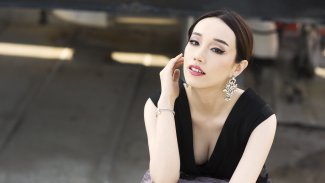
Hongni Wu
Links
Download Assets
“Hongni Wu brought technical agility, warm colourings and an ample sound…she sang with youthful bloom and richness.”
(New York Times)
A former member of Royal Ballet and Opera’s Jette Parker Young Artists Programme, Hongni Wu’s returns to Covent Garden as a principal guest have brought her unqualified success: as Kuchtik in a new production of Rusalka, conducted by Semyon Bychkov, as Siébel in David McVicar’s production of Faust under Maurizio Benini and as Suzuki in Madama Butterfly conducted by Kevin John Edusei, where she was hailed by The Guardian as “a mezzo of rich mellow dignity”.
Beyond her acclaimed performances at Covent Garden, Hongni Wu has established herself internationally in a wide-ranging repertoire: she has delighted critics with her Rossini portrayals, from her spirited Angelina in La Ceneretola at Teatro Carlo Felice di Genova under Riccardo Minasi to her acclaimed Rosina in Il barbiere di Siviglia at San Francisco Opera, Macau International Music Festival and Opera Theater of Saint Louis, where she was awarded the Mabel Dorn Reeder Prize for outstanding performance of the season. Other highlights include Cherubino in Le nozze di Figaro at Santa Fe Opera under Harry Bicket and at Opera North under Valentina Peleggi as well as Dorabella in Così fan Tutte at Pacific Opera Victoria under Timothy Vernon. At Opéra National de Montpellier, she debuted as Der Komponist (Ariadne auf Naxos), returning as Farnace (Mitridate, re di Ponto) under Philippe Jaroussky, debuting at The Royal Danish Opera as Suzuki under Paolo Carignani, and reprised the role of Kuchtik at Opera Royal de Wallonie under Giampaolo Bisanti.
See more
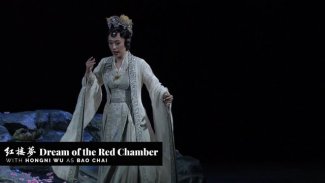
Excelling in contemporary repertoire, Wu has created several important roles in recent world premieres including the dual roles of Comrade Chin and Shu Fung in Huang Ruo’s M. Butterfly at Santa Fe Opera, and at San Francisco Opera both Bao Chai in Bright Sheng’s Dream of the Red Chamber as well as Crab General/Venus Star in Huang Ruo’s TheMonkey King, directed by Diane Paulus and conducted by Carolyn Kuan. With NorrköpingSymphony Orchestra, Hongni Wu performed as Linea in the world premiere of Marc Blitzstein’s Parabola and Circula, conducted by Karl-Heinz Steffens for performances in Norrköpping and at Berliner Philharmonie, and recorded live for CD release.
In the 2026/2027 season, Hongni Wu debuts at Glyndebourne Festival Opera as Rosina in Annabel Arden’s production of Il barbiere di Siviglia under Chloe Rooke and returns to Royal Ballet & Opera as Suzuki in Moshe Leiser and Patrice Caurier’s production of Madama Butterfly under Henrik Nánási.
Recent concert highlights include Mahler, Symphony No 3 with Paavo Järvi and the Philharmonia Orchestra at London’s Royal Festival Hall, a curated programme of Handel and Cherubini with Ensemble Resonanz and Riccardo Minasi at the Kölner Philharmonie and Beethoven, Symphony No 9 with London Philharmonic Orchestra under Tan Dun. In Tan Dun’s epic Buddha Passion, Hongni Wu made her debut with the Accademia Nazionale di Santa Cecilia under the composer’s baton. In China, she has performed Ravel’s Shéhérazade with Lan Shui and the Chinese National Symphony Orchestra, Mahler, Das Lied von der Erde with both Guangzhou Symphony Orchestra under Yu Long and Shanghai Symphony Orchestra under Tan Dun and she sang her first Mahler, Lieder eines fahrenden Gesellen with Wuhan Philharmonic Orchestra.
Together with pianist Sergey Rybin, she gave sold-out recitals of works by Brahms, Dvořák and de Falla at Guangzhou Xinghai Concert Hall and Jaguar Shanghai Symphony Hall, the latter welcoming her back the following season for a recital with pianist Anna Geniushene as part of the Z+ Festival.
Whilst studying at the Manhattan School of Music, Hongni Wu gave performances as Angelina, Sesto in La clemenza di Tito and La libellule in L’enfant et les sortilèges, garnering praise from the New York Times for her “technical agility, warm colourings, and ample sound,” and was a 2018 winner of The Metropolitan Opera National Council Auditions. As a young artist at Covent Garden, Wu made her main stage debut as Flora in Richard Eyre’s popular production of La traviata under Antonello Manacorda, subsequently appearing as Mercédès in Carmen, Zweite Dame in Die Zauberflöte and Siébel in Gounod’s Faust. At the LinburyTheatre, she was praised for her gritty interpretation of Hans Werner Henze’s Phaedra and as part of the Young Artists’ Summer Showcase she performed scenes from both Pelléas et Mélisande and Il barbiere di Siviglia.
Contacts
Peppie Johnson Associate Artist Manager, VOICE
General Management
Peppie Johnson Associate Artist Manager, VOICE
General Management
Gallery


“Mezzo-soprano Hongni Wu’s Rosina, wispy like the teenager the role is, unfurled Una voce poco fa with endlessly varied details both vocally and dramatically.”
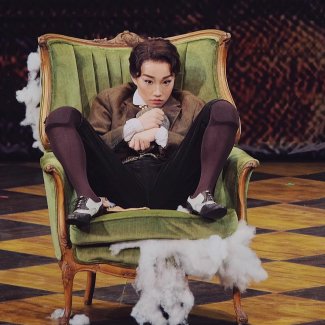
“And now we get to Cherubino — the performance that unquestionably owned the evening. Hongni Wu must have spent hours studying teenage body language, because she was teenager incarnate. The sulking posture, the random leg-scratching when dressed as a bridesmaid, the insta-swagger when ladies appeared, she oscillated between petulant child and aspiring ladies’ man with rampant hormonal energy. Wu made Cherubino utterly harmless and hilariously funny.”
“Hongni Wu impressed with her svelte mezzo as Linea (Musikfest Berlin).”
Hongni Wu with her velvety lower range, captivates with her impeccable Italian phrasing in the recitative, while deeply moving the audience with a genuine sincerity.
Hongni Wu brings a captivating stage presence and a voice rich in nuance to her portrayal of Farnace, perfectly suited to embody the rebellious son.
“As Rosina, the appealing mezzo Hongni Wu was youthful and lively, moving with easy grace and revealing a pearly voice. She handily negotiated Rossini’s ornate lines, showing tasteful restraint in her ornamentation.”
“Hongni Wu dazzles as an assertive Rosina, particularly in the demanding coloratura passages that require precision and agility.”
“Knocking it out of the park is mezzo-soprano Hongni Wu as Rosina. Her luminosity onstage results in some dynamic chemistry with both Stark and Morstein. Throw in her dynamic voice as you have a stellar OTSL debut from a talented performer who will undoubtedly be heard from again.”
“Andrew Morstein as Almaviva and Hongni Wu as Rosina are quite charming, confident young lovers. Both bring beautiful voices and fine comic senses to the roles.”
“Aided in no small part by the superb Suzuki of Hongni Wu, who became the lens through which the whole tragedy is refracted.”
“But best alongside the title role is undoubtedly Hongni Wu’s Suzuki, who brings a mezzo of rich mellow dignity to her important role.”
“Kuchtik is played by the young mezzo-soprano Hongni Wu, whose versatile voice moves easily between high and low tessituras. Expressive in her acting and voice, the kitchen boy is endearing, almost innocent.”
“the delightful young mezzo-soprano Hongni Wu stands out as Kuchtík, the kitchen boy”
“Mezzo-soprano Hongni Wu made for a feisty Cinderella and sang with strength but also sensitivity.”
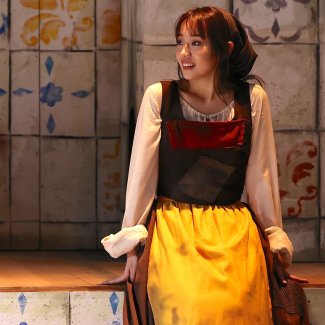
“As Angelina (Cinderella), Hongni Wu met all the coloratura challenges set by Rossini and sang with an elegance and emotive beauty that transformed even simple phrases into meaningful sentiments. Angelina’s final aria was particularly moving: Wu effortlessly displayed the entirety of her range, moving through explosive rapid-fire passages with silky smoothness.”
“Hongni Wu could have a career singing nothing but Cenerentola. The beautiful Chinese mezzo had everything needed, vocally and every other way, at her disposal; expressive features, a voice with a big bright top, a warm middle voice, and an easy plunge into the lower register. The speed and accuracy of her coloratura was never less than dazzling, even possessing an impeccable old-school trill that thrilled… She quite brought down the house.”
“Compelling young Chinese mezzo Hongni Wu (Dorabella) in her Canadian debut and a bright future in front of her”
“Hongni Wu (Dorabella) is a highly accomplished mezzo-soprano with a keening timbre and enviable technique.”
“Hongni Wu almost upstages everyone with a brilliant turn as the servant Kuchtik.”
“The young mezzo Hongni Wu is a revelation [as Der Komponist]. Between creative exaltation and existential angst, her emotion grips us…the timbre of the voice is fresh, radiant and assured.”
“Hongni Wu embodies the beautiful role of Der Komponist with candour and believable naïveté, leading her to give in to the enchantments of Zerbinetta. Her mezzo voice with a silky lower-register and controlled legato inhabits the role from start to finish.”
“Der Komponist benefiting from the youthful ardour and clear timbre of Hongni Wu.”
“The JPYA singers shone, led by the Chinese mezzo-soprano Hongni Wu as a bird-like, manga-vamp Phaedra”
“Chinese mezzo-soprano Hongni Wu is particularly impressive in the title role, singing this hugely difficult music with great skill and acting the role with great passion.”
“But it was the pairing of Aphrodite and mezzo-soprano Hongni Wu as Phaedra that set the evening ablaze. These young singers had the presence and power of true opera stars and, in diva-esque form, they carried all before them.”
“Wu’s richly coloured voice and excellent phrasing were most impressive in both of her arias, especially ‘Voi che sapete’.”
“Hongni Wu, 23, a mezzo-soprano, brought technical agility, warm colourings and an ample sound to ‘Cruda sorte’, a bel canto showpiece from Rossini’s L’italiana in Algeri. Then, in a bold choice, she sang the opening scene of Strauss’ Der Rosenkavalier with youthful bloom and richness. We’ll have to see if she follows the path of the coloratura-happy Marilyn Horne or the refined, lyrical Susan Graham.”
“Her voice was pure and bright, singing with beauty as she expressed her interest in love over riches…Wu’s voice blossomed into a wide array of colours and emotions. She developed into her character and proved to be a remarkably outstanding voice.”