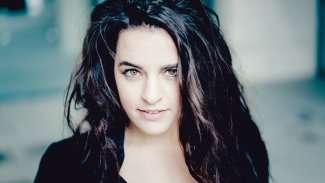
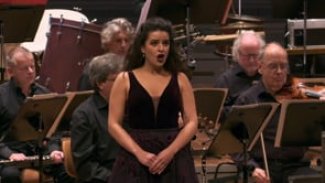
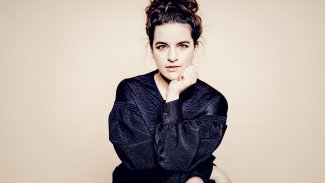
Sarah Aristidou
“Sarah Aristidou as Zerbinetta is a discovery… A soprano who wins over the audience, and for whom no top note is too high.”
(Der Tagesspiegel, September 2020)
French soprano and agile coloratura, Sarah Aristidou is a gifted singer, vocally serene in classical, contemporary and folk music, as well as live improvisations. She ranks as one of the most innovative and creative artists of her generation and in 2022, she became the first singer to receive the Belmont Prize for Contemporary Music.
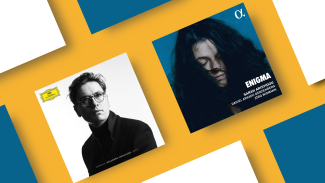
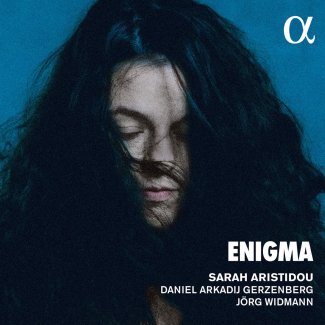
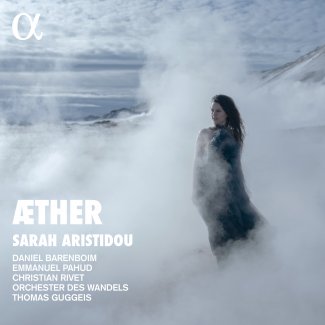
Sarah’s recording projects reflect her artistic vision — a shared silence born from the vastness of an authentic, resonant note. Her debut album AETHER (2021), together with Thomas Guggeis, Orchester des Wandels and special guests Daniel Barenboim, Emmanuel Pahud and Christian Rivet, was nominated for a BBC Music Magazine Award and featured composers ranging from Handel to Varèse AS WELL AS Jörg Widmann’s Labyrinth V (Alpha Classics). Her wider discography includes her second solo release, Enigma (2023, Alpha Classics), which was awarded the Preis der Deutschen Schallplattenkritik, as well as Thomas Larcher’s The Living Mountain (ECM), S’Agapo with Kaan Bulak (Feral Note) and Max Cooper’s EP Seme, which was performed as part of the Salzburg 2024 Easter Festival.
See more
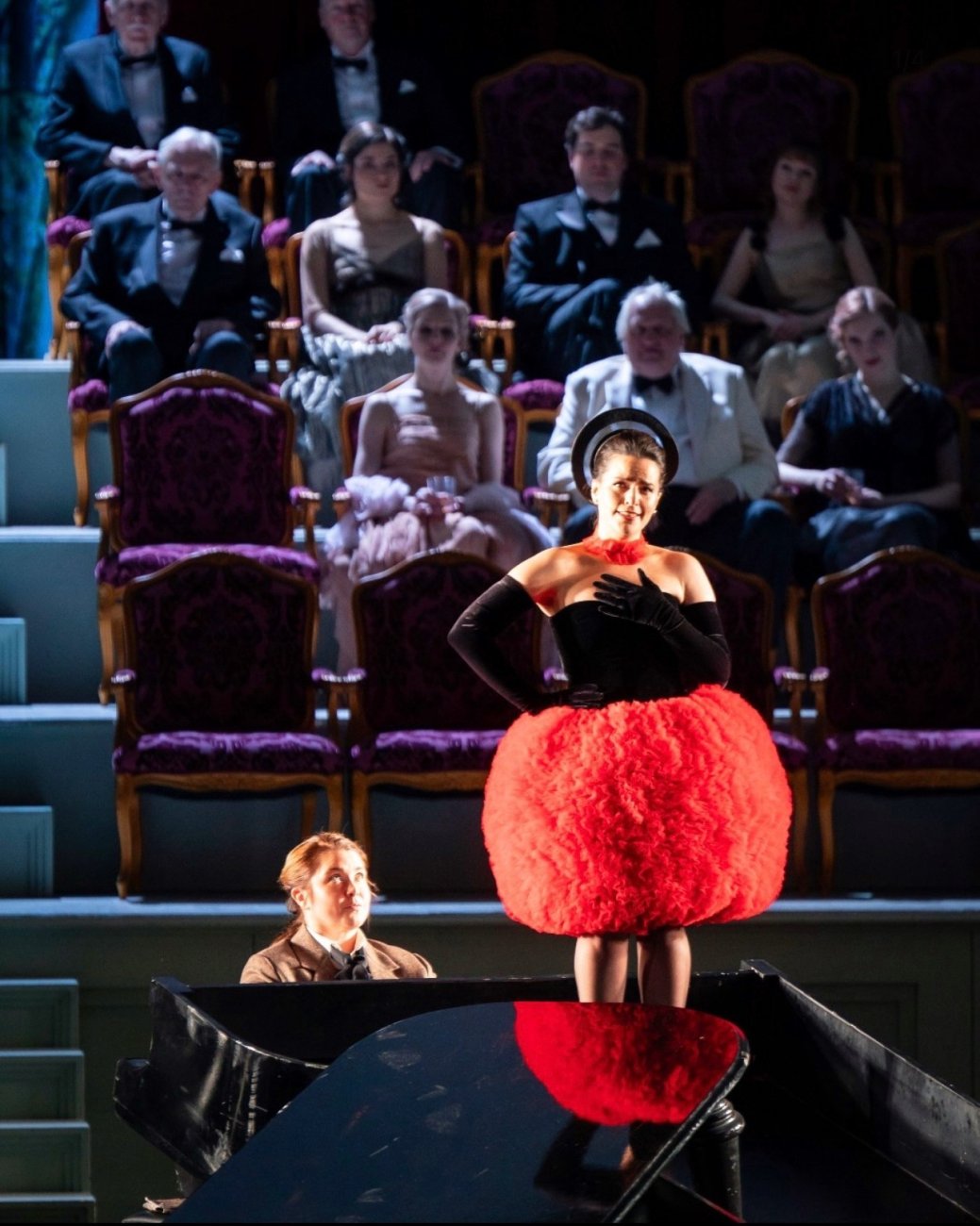
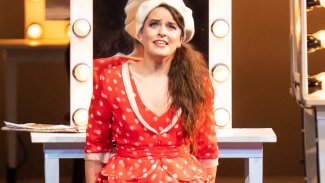
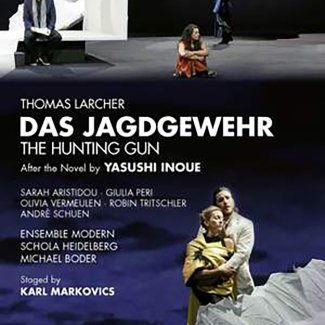
An intense and committed actress, in recent breakthrough performances of Ligeti’s Le Grande Macabre, Aristidou made lasting impact as Venus and Gepopo in two acclaimed new productions, marking her debut at Wiener Staatsoper under Pablo Heras-Casado, and at Bayerische Staatsoper, conducted by Kent Nagano. As Zerbinetta in Ariadne auf Naxos, she has appeared at Wiener Staatsoper, Staatsoper unter den Linden, Oper Frankfurt and Semperoper Dresden, and as Ismene in Mozart’s Mitridate, she joined productions in Copenhagen, Malmö and Berlin, the latter conducted by Marc Minkowski. Sarah Aristidou received exceptional reviews for her performances both as Shoko in the world-premiere of Thomas Larcher’s Das Jagdgewehr in co-production with Bregenzer Festspiele and Aldeburgh Festival and as Hanako, marking her debut at Bayerische Staatsoper, in a collaborative production between choreographer Sidi Larbi Cherkaoui and Thai artist Rirkrit Tiravanija of Toshio Hosokawa’s Hanjo. Further world premiere performances include Aristidou’s debut at Opernhaus Zürich in the world premiere of Beat Furrer’s Das Grosse Feuer, creating the role of Aquella Muchacha.
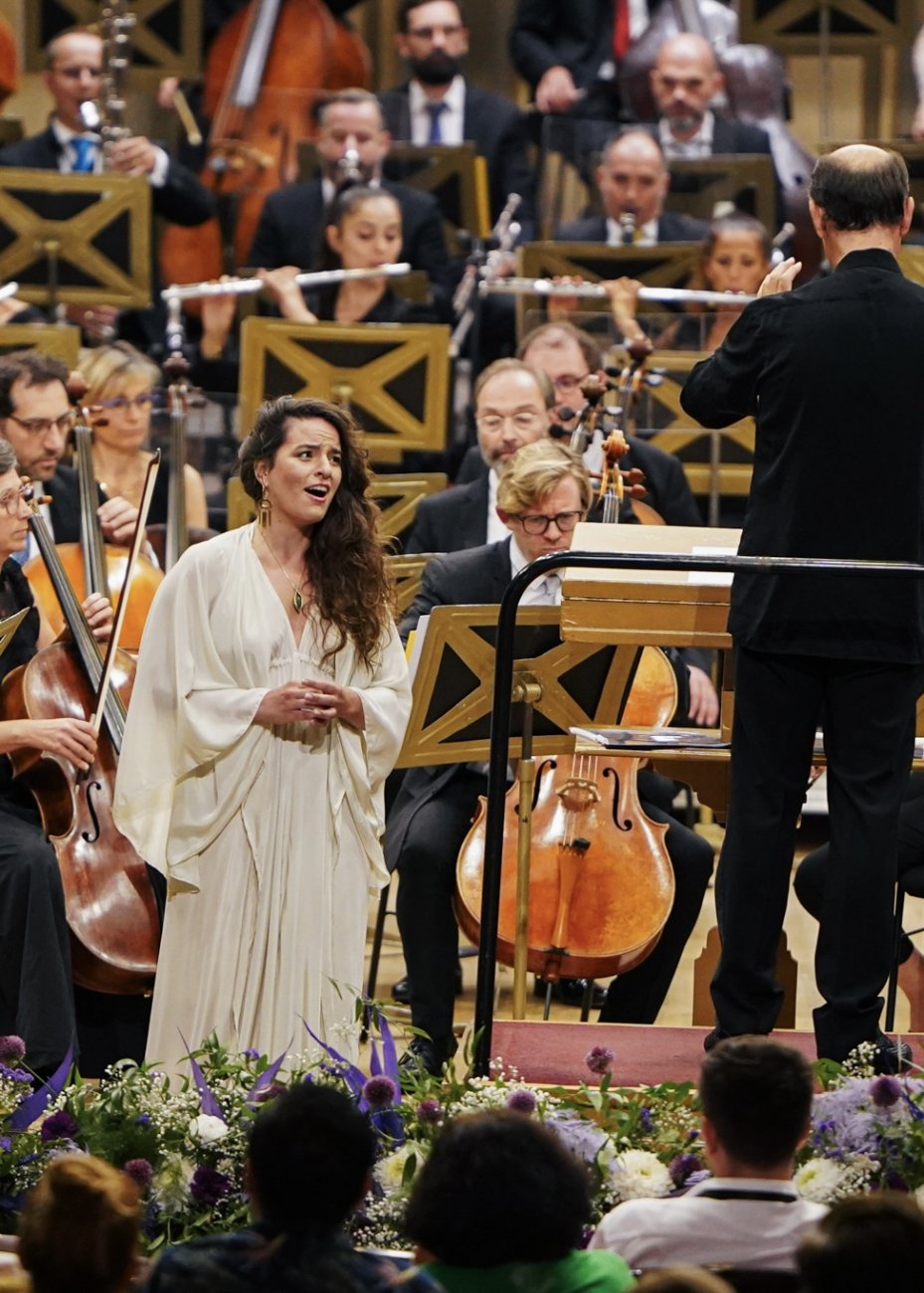
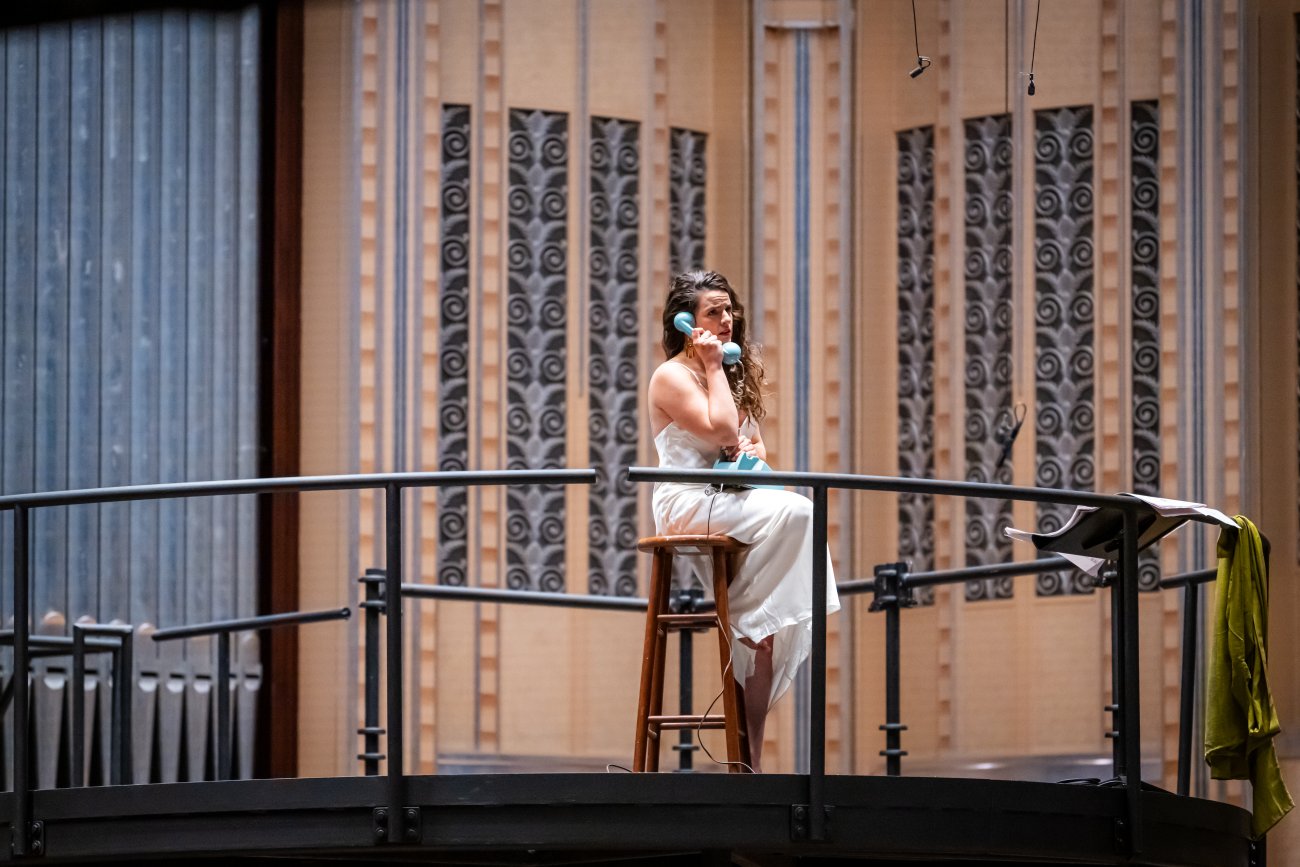
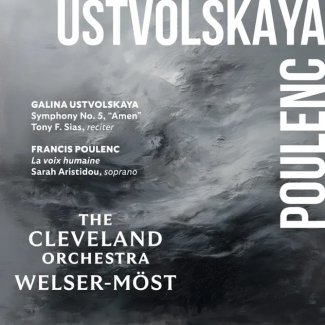
On the concert platform, Aristidou recently debuted with The Cleveland Orchestra and Franz Welser-Möst for her first performances of Poulenc’s La Voix Humaine and made her BBC Proms debut with Ensemble Intercontemporain and Pierre Bleuse performing Berio’s Recital I for Cathy, which she also performed with Spectra Ensemble at BOZAR, alongside Berberian’s Stripsody. Further concert highlights included a tour of Boulez’s Pli selon Pli with Les Siècles and Franck Ollu in Tourcoing, Paris, Munich and Baden-Baden, Boulez’s Le Soleil des Eaux with Juraj Valčuha and Orchestre National de France. With Orchestre de Paris, she performed Fauré’s Requiem under Klaus Mäkelä, with Bergen Philharmonic Orchestra she sang Orff’s Carmina Burana under Aziz Shokhakimov and, conducted by the composer, she performed Jörg Widmann’s Versuch über die Fuge with Orquestra Simfonica de Barcelona.
In the 25/26 season, Aristidou revives Venus/Gepopo in Le Grand Macabre at Wiener Staatsoper under Pablo Heras-Casado, in concert with Finnish Radio Symphony Orchestra led by Nicholas Collon at the Helsinki Festival, and to open Musikfest Berlin 2026 where she also reunites with WDR Sinfonieorchester Köln and Kent Nagano for Yvonne Loriod’s La Sainte Face. On the concert stage, Sarah Aristidou continues touring Boulez Pli selon Pli and Debussy Trois poèmes de Stéphane Mallarmé with Les Siècles and Frank Ollu in Bucharest and Berlin, joins Ensemble Intercontemporain for Berio’s Folksongs with Vimbayi Kaziboni, and joins players of l’Orchestre de Paris and pianist Kunal Lahiry for a programme of Ravel and Delage at Montfort L’Amaury. Aristidou later joins pianist Alessio Bax for a series of recitals as part of the London Festival of Chamber Music at Smith Square Hall, performs Max Richter’s Voices at Southbank Centre with Philharmonia Orchestra under Matthew Lynch, and reunites with Ensemble Modern for Unsuk Chin’s Akrostichon-Wortspiel at Prague Spring Festival as well as for Dusapin’s Passion at Salzburger Festspiele, the latter conducted by Franck Ollu.
Aristidou’s voice has inspired several compositions including Aribert Reimann’s Cinq fragments lyriques, premiered with Deutsches Symphonie-Orchester Berlin and Robin Ticciati and Jörg Widmann’s Labyrinth IV, presented with Boulez Ensemble and Daniel Barenboim. She made an acclaimed debut at Salzburger Festspiele in Morton Feldman’s Neither with ORF Radio-Symphonieorchester Wien under Roland Kluttig, returning last season with both Klangforum Wien with Beat Furrer conducting his own composition, Begehren, and Georg Friedrich Haas’ Koma under Bas Wiegers. With Berliner Philharmoniker, she debuted in Edgard Varèse‘s Offrandes and, in a special project entitled ‘Transfiguré – 12 vies de Schönberg’, Artistidou debuted with Orchestre de Paris under Ariane Matiakh. Additional concert highlights include Brahms’ Ein deutsches Requiem with Lahti Symphony Orchestra and Masaaki Suzuki, Pergolesi’s Stabat Mater with Gürzenich-Orchester under Roth, and Bach’s St John’s Passion with Akademie für Alte Musik under Justin Doyle. Artistidou has debuted many new works including Brett Dean’s Ich lausche und ich höre with the Scharoun Ensemble at Berlin’s Konzerthaus and Larcher’s The Living Mountain at Amsterdam’s Concertgebouw. With Staatskapelle Berlin and Finnegan Downie Dear, she has presented George Benjamin’s Into the Little Hill and Mind of Fire, with WDR Sinfonieorchester under Roderick Cox Ligeti’s Mysteries of the Macabre, with Philharmonie Zuidnederland and Duncan Ward Abrahamsen’s Let Me Tell You, with Deutsches Symphonie Orchester Berlin Schӧnberg’s Pierrot Lunaire and, conducted by the composer himself, with Symphonieorchester des Bayerischen Rundfunks Matthias Pintscher’s With Lilies White.
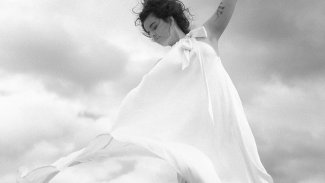
Aristidou received the Luitpold Prize for Outstanding Performance at the Kissinger Sommer Festival (2021) and has been twice nominated for Opernwelt’s Best Newcomer award. Off stage, Sarah is a talented photographer, capturing the beauty of the surroundings which inspire her as an artist.
Contacts
General Management
Gallery


“Sarah Aristidou received some of the biggest applause of this year’s edition (Musikfest Berlin).”
“French soprano Sarah Aristidou is brilliant, transforming the role of Muchacha — the only solo role endowed with a melody — into a shining light.”
“Sarah Aristidou is brilliant, transforming the role of Aquella Muchacha into a shining light.”
“Soprano Sarah Aristidou expertly executed the high, melismatic lines, alternating with phrases shouted out in defiant appeal. Aided by Mallwitz’s resolutely unsentimental approach, Aristidou balanced sweetness and irony, the voice’s final fading seemed rendered as anti-climax, symphonic scale falling away to powerless song.”
“The opera is told and experienced from the standpoint of Michaela, the outstanding Sarah Aristidou, placed quite separately from the rest of the cast: tellingly, unseen to us, somehow both inverting and yet strengthening the idea of an out-of-body experience.”
“Sarah Aristidou , who, in the tradition of Barbara Hannigan, knows how to perform contemporary music with much more than the printed notes, brings to this poetic role a fascinating intensity. There is a quivering sensuality in this voice, with a warm, broad timbre, without any loss of precision. Contemporary music deserves voices as strong as the classical repertoire, and it now obtains them, with Sarah Aristidou”
“Sarah Aristidou shows off her expansive high notes right up in the double role of the head of the secret police and Venus. Her timbre shimmer as bright as a bell, but her voice is also well controlled across all registers.”
“As the head of the secret police, Sarah Aristidou turns the coloratura high-wire act into a real showpiece.”
“Sarah Aristidou celebrated her Wiener Staatsoper house debut in Ligeti’s Le Grande Macabre and is now delighting audiences as the lively Zerbinetta, who is confident in her coloratura and has an engaging acting performance. Her aria „Großmächtige Prinzessin“ is rightly applauded. Far from being a superficial creature, Aristidou’s Zerbinetta reveals her dark side and cares deeply for Ariadne’s well-being, giving the impression that a spiritual connection exists between the two.”
“Sarah Aristidou shines especially as head of the Gepopo secret police… sassy, delightfully close to madness.”
“Sarah Aristodou impressed with her velvety balanced voice in dramatic force as well as with the fine silvery shimmer of her timbre.”
“Sarah Aristidou pulls out all the stops of her pearly-sounding coloratura soprano in the dual role as head of Gepopo and as Venus.”
“Sarah Aristidou virtuosically gives Gepopo and Venus that absurd something with daring high tones and coloratura.”
“Sarah Aristidou is impressive as the head of the secret police (as well as Venus).”
“You experience how Sarah Aristidou gracefully frames even declamatory passages, how she integrates delicately into the overall sound and yet radiates great presence.”
“Sarah Aristidou knew how to inspire the audience with her sensitive performance and as an encore with an a cappella performed Cypriot folksong provided another touching highlight of this full concert evening.”
“A most dazzling debut: soprano Sarah Aristidou makes an impact with Æther.”
“Her voice is strong, and very French, reminiscent at times of Denise Duval, at others of Mady Mesplé.”
“The Widmann, with its ululations, sobs, jazz inflections and wild laughter, is something of a tour de force.”
“On her debut CD “Æther” the singer Sarah Aristidou enchants with classic coloratura arias as well as with the boldest experiments in modern singing.”
“Sarah Aristidou Soars through the Æther. The French-Cypriot soprano impresses with her formidable chops and utterly unique repertory.”
“Æther is like few other vocal recordings I’ve encountered. Far more than a showcase for Sarah Aristidou, an astounding French-Cypriot soprano with a strong voice and supremely high coloratura extension.”
“Through skilful sequences from one style to another without any stylistic shock, the award-winning and acclaimed young artist on the European scene ”etherizes” the space and time between her and us, in a sort of symbiosis guided by the meaning of the chosen pieces, their musical interest, their emotional significance and her extraordinary talent for communication.”
“Sarah Aristidou deploys a fine and agile soprano, capable of the most remarkable expressive impulses and the most subtle whispers.”
“Simply outstanding.”
“The French Cypriot soprano Sarah Aristidou presents her first album and can rightly do so immediately alongside names such as Daniel Barenboim, Emmanuel Pahud and Christian Rivet.”
“A strong vocal personality with which we will have to reckon.”
“The saving grace of this concert performance, in the bare-bones setting of Salzburg’s Collegiate church, was the polish and shimmer of the ORF Radio-Symphonieorchester Wien’s playing and the purity of Sarah Aristidou’s voice.”
“Neither can only succeed if a soprano like Sarah Aristidou is performing the work, who not only manages the difficult vocal part, but charges it with expression and sensitivity.”
“Sarah Aristidou performed a tremendous, powerful performance in one of the boldest and most difficult coloratura arias in the opera literature, floating effortlessly to the highest heights.”
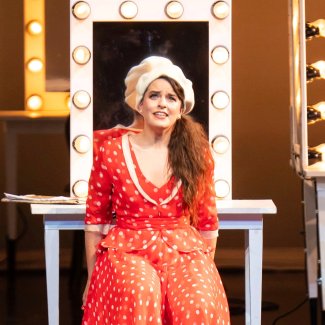
“Sarah Aristidou is the lone guest singer in the production. In the high-flying coloratura role of Zerbinetta, her vocal fireworks are impressive and, thanks to her technical proficiency, express more than mere virtuosity. When her Zerbinetta confides in the Composer (Claudia Mahnke) about her loneliness, Aristidou’s phrases are somehow ebullient, yet sorrowful, as though her vocal leaps and tumbles both expose and shield Zerbinetta’s broken heart.”
“Sarah Aristidou represented Zerbinetta as if she were herself: a self-confident woman of today.”
“Soprano Sarah Aristidou shines in the title role [of Pinocchio], singing, shaping, expressing and miming equally convincingly.”
“Sarah Aristidou as Zerbinetta is a discovery… A soprano who wins over the audience, and for whom no top note is too high.”
“Aristidou embodied a spirited and energetic Zerbinetta with a gorgeous stage presence. With safe highs and flawless technique, she was absolutely up to the role despite her young age…”
“Sarah Aristidou embodies the role of Maïma with her lyrical, unexpectedly bright and extremely clear soprano.”
“Outclassed by the exceptions of Sarah Aristidou, constantly knocking back the high Cs and beyond as the stroppy teenager Shoko.”
“Sarah Aristidou as Shoko, the latter of whom managed to emote with Oscar-worthy panache, while pushing her voice into the stratosphere.”
‘Sarah Aristidou fantastically mastered the role of Shoko, which reached stratospheric heights…”
“As the scandalised daughter Shoko, Sarah Aristidou is extraordinary. Possessing a coloratura soprano of astonishing clarity and range, she remains vocally unforced and maintains quality of tone even in the most stratospheric registers.”
“Hitting some alarmingly high notes with total aplomb, Sarah Aristidou sings the intense role of Misugi’s niece Shoko.”
“In the role, Thomas Larcher wrote the most adventurous coloraturas, which the French Sarah Aristidou pulls off with breathtaking clarity and defiant energy — up to a shattering top note beyond all imagination.”
“Sarah Aristidou captures the adolescent rage of Shoko while mastering Larcher’s virtuosic demands.”
“Better yet, a superbly idiomatic Sarah Aristidou in the role of High Priestess.”