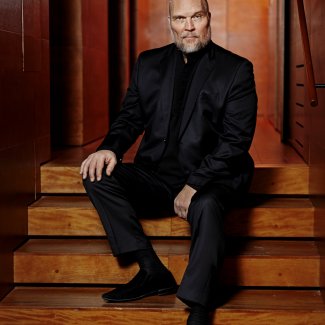
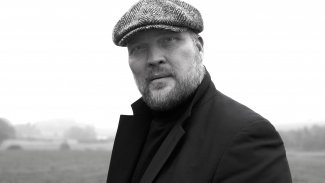
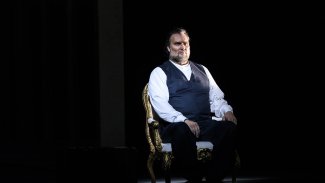
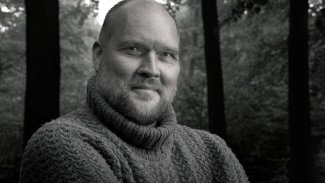
Stephen Milling
“Stephen Milling is outstanding as Hagen, singing with huge power, but also scrupulous in his care for the text and phrasing.”
(Financial Times)
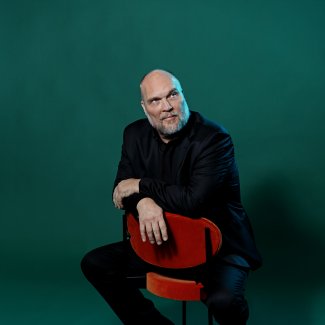
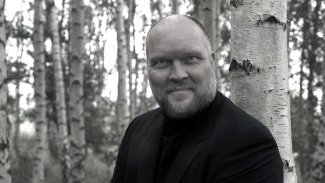
Danish bass Stephen Milling is a prominent interpreter of Wagner’s repertoire acclaimed on the major international opera stages for the detail of his text and phrasing and for his dramatically intense performances. In the roles of Hagen and Gurnemanz performances have taken him to Bayreuther Festspiele under Kirill Petrenko, Wiener Staatsoper under Sir Simon Rattle, Osterfestspiele Salzburg under Christian Thielemann, Royal Ballet & Opera under Sir Antonio Pappano, and Teatro Real under Pablo Heras-Casado. Further Wagner roles include Hunding (Die Walküre) at the Metropolitan Opera, Daland (Der fliegende Holländer) at Bayerische Staatsoper and Royal Ballet & Opera under Henrik Nánási, and König Marke (Tristan und Isolde) for Staatsoper Unter den Linden under Daniel Barenboim.
Maintaining a broad and varied repertoire, Stephen Milling is in popular demand for his portrayal of Sarastro (Die Zauberflöte) with appearances including at Royal Ballet & Opera, Bayerische Staatsoper, Wiener Staatsoper, Gran Teatre del Liceu and most recently at the Metropolitan Opera under the baton of Evan Rogister, and in Fidelio he has been heard as Rocco at Teatro alla Scala and as Don Fernando at the Metropolitan Opera. He has appeared as Filippo II (Don Carlos) at San Francisco Opera and Royal Danish Opera and Padre Guardiano (La forza del destino) at Semperoper Dresden and Palau de les Artes Reina Sofia. Equally compelling in major works of the 20th and 21st Centuries, Milling recently made an acclaimed debut as Doktor in Andrea Breth’s gripping staging of Wozzeck, conducted by Christian Thielemann, as well as returning to the role of Arkel (Pelléas et Mélisande), conducted by François-Xavier Roth both on the stage of Staatsoper Unter den Linden. In Kaija Saariaho’s Adriana Mater, Stephen Milling created the role of Tsargo at Opéra national de Paris under Esa-Pekka Salonen and returned to the Metropolitan Opera as the Priest in Innocence, conducted by Susanna Mälkki.
See More
During the 2026/27 season Stephen Milling appears in concert with Orquestra Simfonica de Barcelona for Act I of Die Walküre conducted by Ludovic Morlot, and with Danish National Symphony Orchestra for Brahms’ Vier ernste Gesänge under Aziz Shokhakimov. In opera there will be two productions at home on the stage of Royal Danish Opera where he reprises the role of the Priest in Innocence under the baton of Elena Schwarz and appears as The Baron/Dr Vieglius in Christof Loy’s setting of Der ferne Klang conducted by Marie Jacquot. As Sarastro, he performs at Hyogo Performing Arts Centre under the baton of Yutaka Sado.
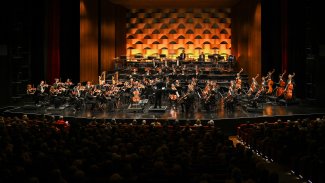
A distinguished concert artist, Stephen Milling has appeared at Vienna’s Musikverein in performances of Schmidt’s Das Buch mit Sieben Siegeln under Ingo Metzmacher and with Berliner Philharmoniker in Verdi’s Messa da Requiem under the late Mariss Jansons. In concert performance, he joined a European tour of Das Rheingold with the Rotterdam Philharmonic Orchestra conducted by Yannick Nezét-Séguin, as Hunding in concert performances of Die Walküre with both Dallas Symphony Orchestra under Fabio Luisi and Accademia di Santa Cecilia under Daniel Harding and in Act III of Parsifal he performed at the Grafenegg Music Festival conducted by Roberto Paternostro.
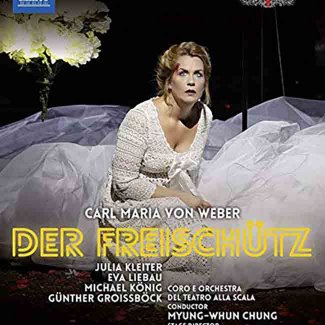
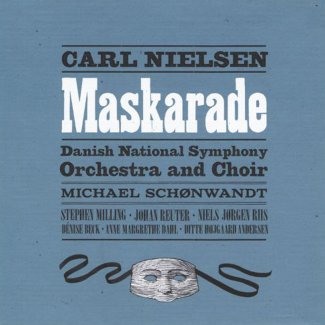
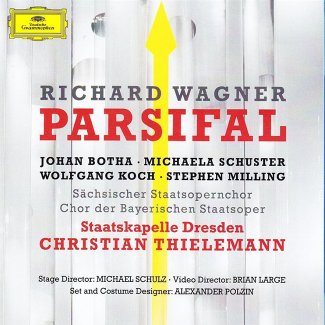
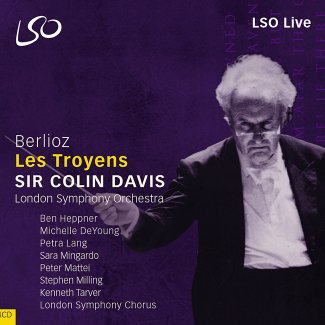
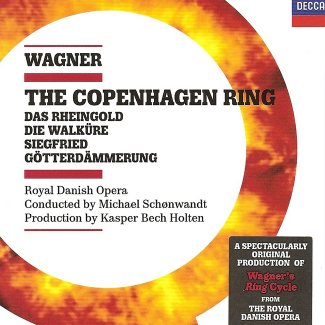
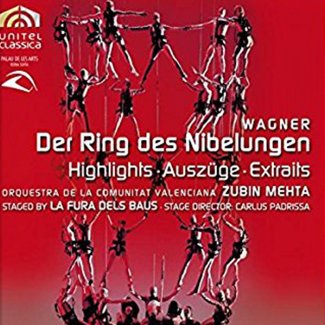
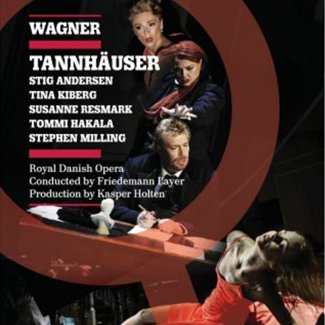
Stephen Milling features on several CDs including Les Troyens with London Symphony Orchestra (Sir Colin Davis) and on DVD he stars in Der Ring des Nibelungen staged by La Fura dels Baus in Valencia, Parsifal from the Osterfestspiele Salzburg, Der Freischütz from Teatro alla Scala and in three productions from the Royal Danish Opera: The Copenhagen Ring, Tannhäuser and Maskarade.
Following his training at the Royal Danish Academy of Music, Stephen Milling joined the Royal Danish Opera where he debuted several roles that have remained central to his repertoire which, along with two early international debuts at Teatro alla Scala as Don Fernando (Fidelio) under Riccardo Muti and as Fasolt and Hunding in Seattle Opera’s Ring Cycle, set him along the path towards today’s successful international career.
Contacts
Catherine Znak Artist Relations Manager, VOICE
General Management
Gallery


“Stephen Milling — who here sings both Hunding and Hagen — demonstrates his pedigree in both roles, possessing a penetrating Wagnerian bass.”
“Stephen Milling’s Arkel was sung with sonorous authority and subtle dramatic insight.”
“Stephen Milling, as Arkel, delivers a vocally perfect portrayal of the grandfather of the disparate brothers.”
“Stephen Milling’s Arkel was subtly yet powerfully sketched.”
“Danish bass Stephen Milling, a great Wagnerian interpreter, is perfect for the role of the Commendatore, powerful and menacing as he should be.”
“Stephen Milling makes a powerful impression as the Commendatore. His bass voice is ample, with a dark and dramatic texture, carried by a declamatory phrasing in constant crescendo. His projection is masterful, and his breath control remarkable, culminating in a deeply felt death scene where the final vocal flourish, unexpectedly light in such an imposing low register, strikes the perfect note.”
“Stephen Milling’s Commendatore possesses a beautiful depth of bass, accompanied by a vibrato that lends it added authority.”
“Stephen Milling imbues the Commendatore with an impressive authority. Without resorting to excessive spectacle, the scene maintains a very effective and unsettling power.”
“The priest, played by Stephen Milling . He vocally echoes the character of the father, but balances his interventions with a genuine melodic flair.”
“Stephen Milling’s Priest introduced a darker vocal color, his authority undercut by a certain reserve.”
“Bass Stephen Milling was indispensable as the Priest.”
“Stephen Milling was solid as the priest. His first scene is written very low and the bass delivered the lines with clarity … this musical choice fits in with the narrative, emphasizing the hollowness of the priest’s words. The thoughts and prayers were useless here.”
“Wonderfully balanced between subjective caricature and that of an entire class, embodying both the military and academia, Stephen Milling is an inhuman anthropologist with a suitably booming bass.”
“Stephen Milling as the Doktor, delivered a masterclass in contempt for humanity.”
“With his deep, solid bass, Stephen Milling’s Doktor embodied the absurdly cruel fate that torments Wozzeck.”
“Stephen Milling also ranks among the pinnacles of Wagnerian singing: his voice has astonishing power, allowing him to effortlessly convey the dark colour and menacing accent befitting the fearsome Hunding.”
“With his immense voice and commanding presence, Stephen Milling is, from the moment he steps on stage, a Hunding who is as disturbing as he is smug, confident in his right to dispose of his vassals, his enemies and his wife as he sees fit.”
“Stephen Milling’s Sarastro rose to an admirable ‘In diesen heil’gen Hallen’”
“Stephen Milling as Don Fernando imposingly dispatched justice at the end.”
“Stephen Milling as Sarastro gave a knockout vocal performance. His arias “O Isis und Osiris” and “In diesen heil’gen Hallen” filled the Met’s main hall with his rich bass voice.”
“The Danish bass Stephen Milling conceived a Sarastro with powerful, resonant means and enormous stage authority.”
“Milling gives the high priest [Sarastro] an imposing presence and a beautiful bass voice, more noble and serene than solemn and authoritarian.”
“Stephen Milling, brought an actorly gravitas and sensitive musicianship to the role of Sarastro, and a warm, oaky sound to his baritone register.”
“Milling has an ideal presence as Sarastro, tall and commanding and also sympathetic … his singing was rounded and strong with a regal phrasing.”
“Danish bass Stephen Milling embodies Don Fernando, the key to the opera’s resolution, with dignity and kindness. With a powerful, full-bodied voice, he imposes a noble and reassuring presence, administering justice with calm and authority.”
“[König Marke] Milling’s impressive deep bass sound kept the tense audience on the edge of their seats.”
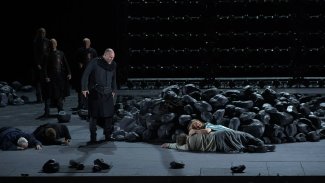
“Of the characters newly introduced in Götterdämmerung, bass Stephen Milling’s Hagen was the standout, booming, leering, and insinuating. His sheer vocal force, above all in his call to arms, sent shivers down the spine.”
“Stephen Milling’s full and resonant bass contributed strongly to his portrayal of Hagen as a duplicitous villain, carefully manipulating Gunther, Gutrune and Siegfried with his affability while secretly biding his time until the right moment when he can cast aside those he has deceived and seize the ring for himself.”
“Stephen Milling’s Hagen was truly frightening, his basso of formidable weight and force.”
“Stephen Milling was Hunding, and his imposing presence and massive bass exuded menace.”
“Stephen Milling, as Gurnemanz, provided the depth of sympathy and wisdom one associates with the best singers in the role”
“The Danish bass Stephen Milling was a sterling Daland, smooth-toned and not unduly demonstrative, hence a satisfying counterweight to the Welshman’s scaled-up Dutchman.”
“Stephen Milling makes a formidable return in the role of King Marke, who initially seems threatening when he faces his deceitful friend Tristan, but gradually Milling lets the king’s vulnerability and disappointment seep through until it ends in a breakdown. It is a finely orchestrated performance.”
“As it is, Stephen Milling’s King Marke provides some missing imagery in embodying all the worldly certainties the lovers seek to look past. Milling’s voice is monumentally pleasurable to listen to and his experience in this repertoire, vocal and dramatic, proves priceless.”
“Hunding was portrayed by the tremendous, rich bass of Stephen Milling.”
“With an awesome bass [Stephen Milling as Hunding]; his mere presence exuded menace.”
“Hagen — an impressive Stephen Milling, athletic build, bronze voice and strong dramatic presence”
“The new Hagen, Stephen Milling, concentrates all the diabolical darkness of the character in his voice and acting.”
“And always waiting his chance and thirsting for power, the beastly role of Hagen, menacingly and strongly sung by Stephen Milling”
“The warmth, opulence and intensity of Stephen Milling’s Gurnemanz is not easily surpassed”
“Stephen Milling’s bluff, healthy sea captain is a good foil for Terfel’s ghostly one.”
“Riding high above the waves, though, Danish bass Stephen Milling as Senta’s father, Daland, … flooding our ears with Wagnerian brilliance.”
“Vocal honours went to Stephen Milling whose deep bass grew more assured throughout and whose towering presence was perfect for Sarastro.”
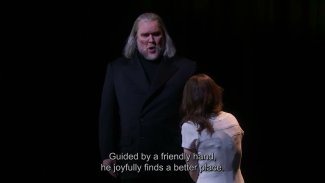
“By the time we got to “In diesen heil’gen Hallen,” Milling’s voice was suffused with deep warmth, like stone warmed by the sun. The scene with [Pamina] is surprisingly tender — a lesson from a father to a daughter that doesn’t feel condescending but instead full of love and understanding.”
“His elegance and poise was reflected in his two big arias “Isis und Isiris” and “In diesen heil’gen Hallen.”… Milling didn’t seem at all daunted by them and managed a seamless transition to those lower reaches without obstructing the balance or fluidity of his line.”
“Stephen Milling brings the executor of the end — Hagen — to the stage with a powerful voice and a lot of presence. With full force, his calls echo pithy over the well-prepared Staatsopernchor.”
“Milling’s voice is so huge he could give the impression of using only a fraction of it for most of Act 1 (and always servicing the text).”
“Stephen Milling is a perfect fit for what can be expected of Sarastro. His calm and warm voice makes him the ideal male figure wanted by Mozart and Schikaneder to symbolize justice and knowledge.”
“Stephen Milling, with the wingspan of a giant and extraordinary scenic poise, sang a serene and firm Sarastro.”
“Stephen Milling as Hagen, with his poise and dark voice producing a chilling call to arms “
“Danish bass Stephen Milling gives an overwhelming physical and vocal presence. The scene with the ghost of his father Alberich, highlighted by musical drama, is one of the best.”
“A cast in which the nobility and the line of Stephen Milling’s singing stand out, whose brilliance in the character of Hagen shows that there are no secondary roles”