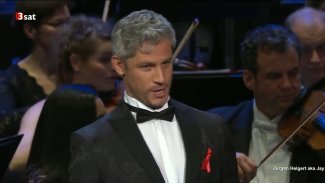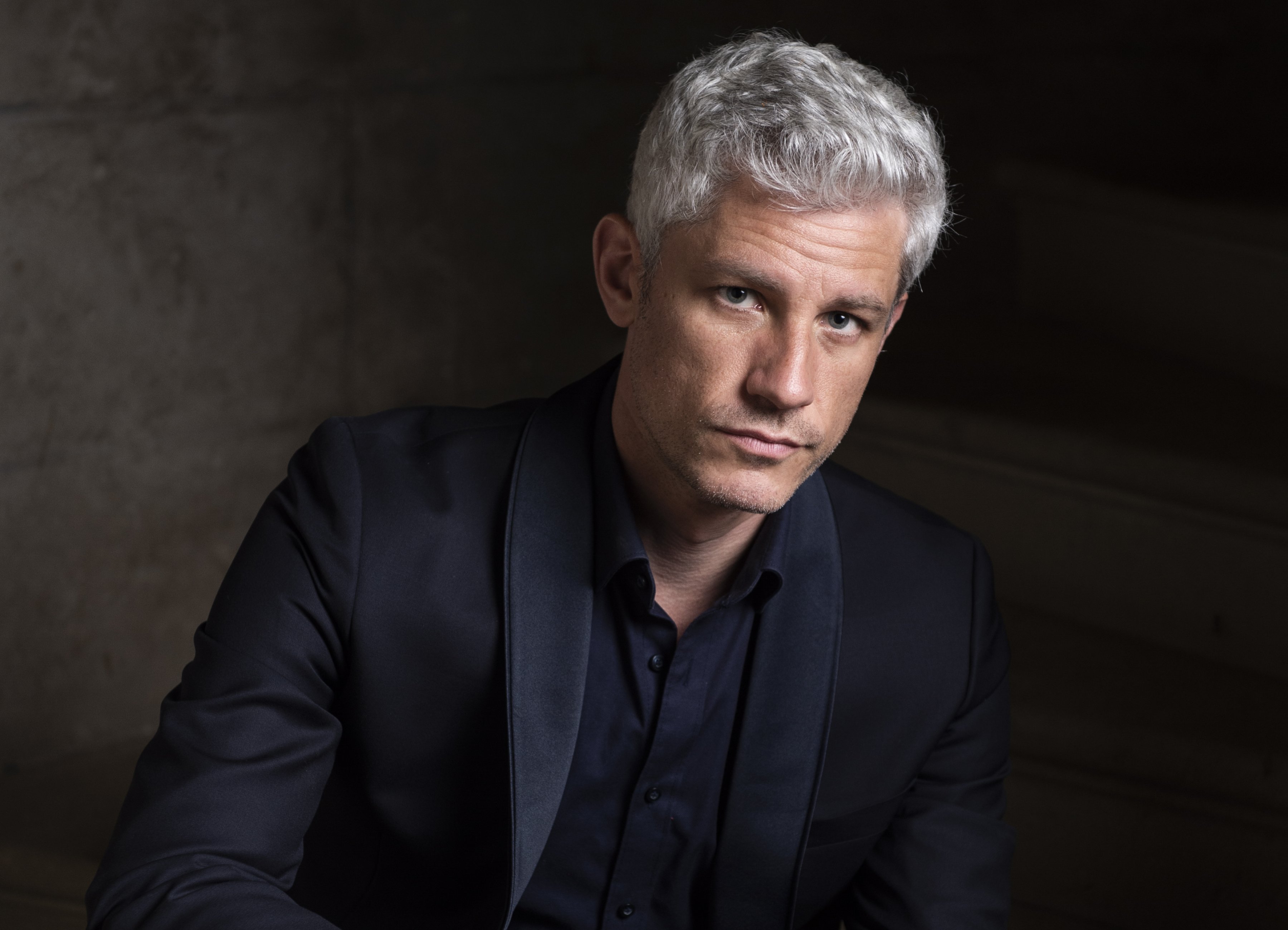
Edwin Crossley-Mercer
“the immense bass of Edwin Crossley-Mercer was able to dominate the orchestra, and with such elegance.”
- Concert Classic, May 2026

Anglo-French bass Edwin Crossley-Mercer is widely recognised for elegant performances of commanding presence, dramatic insight, and exemplary musicianship. An artist of great versatility, he performs a repertoire that spans four centuries including works by Monteverdi, Rameau, Wagner, Verdi, Beethoven, Berg, and Britten. His distinguished career has established him as a sought-after presence on many of Europe’s leading stages, where he collaborates with some of the world’s foremost conductors.
The upcoming season for Crossley-Mercer features his role debut as Arkel in Richard Brunel’s new staging of Pelléas et Mélisande for Opéra national du Rhin under Louis Langrée, a portrayal he will also bring to Amsterdam’s Concertgebouw under Karina Canellakis. He returns to Grand Théâtre de Genève as Sebastian in Netia Jones’ new production of Frank Martin’s La Tempête under Thierry Fischer before joining Cappella Mediterranea on tour in Rameau’s Les Indes galantes under Leonardo García Alarcón.
See More
On the concert stage, Crossley-Mercer performs Berlioz, L’Enfance du Christ under Maxime Pascal with Berliner Philharmoniker and at the Enescu Festival, sings his first Verdi, Messa da Requiem with the Royal Scottish National Orchestra under Patrick Hahn, returns to Netherlands Radio Philharmonic Orchestra for Beethoven, Christus am Ölberge under Riccardo Minasi as well as Beethoven, Symphony No. 9 at Opéra Royal de Versailles under Théotime Langlois de Swarte.
In recent seasons, Crossley-Mercer has further enhanced an already impressive repertoire with a series of critically acclaimed debuts. These have included performances as Tirésias in Dusapin’s Antigone with Orchestre de Paris under Klaus Mäkelä, Raymond in Lucie de Lammermoor for Opéra Comique under Speranza Scappucci and Biterolf in Tannhäuser at Osterfestspiele Salzburg under Andris Nelsons. He has further appeared as Don Alfonso in Così fan tutte for both Opernhaus Zürich and Bayerische Staatsoper, Colline in La bohème with Orchestre National de Lille under Alexandre Bloch, and, most recently, as Sprecher in Die Zauberflöte at Festival d’Aix-en-Provence, conducted by Leonardo García Alarcón.
A sought-after recitalist and former student of Dietrich Fischer-Dieskau, Edwin Crossley-Mercer has presented Lieder and art song performances at some of Europe’s celebrated cultural landmarks, including Bad Kissingen, Festspiele Mecklenburg-Vorpommern, the Musée d’Orsay, Festival de Pâques, Festival International de Colmar, and at the Louvre. A two-time Grammy-Award nominée, his richly varied discography spans acclaimed baroque recordings, a collaboration with American composer Michael Linton on Carmina Catulli and Wilde Songs, a collection of mélodies by Nadia Boulanger, and an insightful interpretation of Schubert’s Winterreise. On the recently released world premiere recording of Thomas de Hartmann’s Esther with Bournemouth Symphony Orchestra, he performs as Hydaspe under Kirill Karabits.
Contacts
General Management
General Management
“Excellent performance by Edwin Crossley-Mercer as the Sprecher, noble timbre, beautiful projection, fine stage presence, and a certain humanity that does not look out of place in the evening’s landscape…”
“More unexpectedly, Edwin Crossley-Mercer’s Orator leaves no one indifferent — quite the contrary. Where this character often succumbs to hieratic solemnity, the baritone imbues him with a profound humanity, an almost paternal kindness that is touching and contrasts with the abstraction of the rest of the staging. His performance, understated yet deeply felt, serves as a reminder of just how truly moving this opera can be when one stops burdening it with superfluous interpretations.”
“Edwin Crossley-Mercer gives the Sprecher, guardian of the threshold of death, a supernatural resonance,”
“Meanwhile, Edwin Crossley-Mercer is anything but unmoving; on the contrary, he is deeply affecting as a benevolent and profoundly human Narrator.”
“Edwin Crossley Mercer was ideally cast as Raimondo.”
“Raymond, the immense bass of Edwin Crossley-Mercer, who was able to dominate the orchestra, and with such elegance.”
“Finally, the priest Raymond Bidebent, played by Edwin Crossley-Mercer, stands out with a convincing sonorous voice and paternal authority, his natural elegance bringing unexpected charisma to the man of the Church.”
“Edwin Crossley-Mercer (Nicolás) sings the most accomplished performance, with exemplary diction and precious relief”
“Nicolás/Edwin Crossley-Mercier makes a strong impression in the first act, whose dark and well-placed voice knows how to make himself heard.”
“Edwin Crossley-Mercer convinces the audience with his voice of resonance and cavernous depth.”
“Special mentions also go to the English-French bass Edwin Crossley-Mercer, who interpreted Tirésias with his deep black grave voice.”
“the French bass Edwin Crossley-Mercer shines as Tirésias”
“Bass Edwin Crossley-Mercer completes the cast as Nourabad, cultivating a rich timbre, a broad voice and rightly authoritative for this character.”
“Escamillo, the toreador, is played by Edwin Crossley-Mercer, whose voice asserts a charismatic virility. Deep, stable and imbued with authority, his tessitura brilliantly supports the figure of the male rival, here deliberately reduced to a cliché in the context of this simulation with overtones of the grotesque. If the character is deliberately stereotyped, the voice, for its part, imposes itself with accuracy and the nobility of projection.”
“Edwin Crossley-Mercer adorns his focused and deep voice (even in his dialogues) with the solemnity of King Creon, who knows how to thunder without compromising the pitch.”
“On the other hand, we applaud Edwin Crossley-Mercer’s magnificent Creon without reservation. The powerfully projected voice knows how to be caressing and warm and then scathing and threatening.”
“In the role of Hercules, bass Edwin Crossley-Mercer is very impressive… The voice is quite spectacular, with unfathomable depths, a great reserve of power, and he manages to give the role the necessary brutality to reflect the somewhat obtuse nature of the character of Hercules, a war leader not include to introspections”
“Of the soloist trio, Lorenzo, appearing in the third part, has the largest space in the work, whose part was performed by the English-French bass Edwin Crossley-Mercer with a velvety soft, voluminous and balanced tone in the positions, with appropriate expressiveness.”
“Edwin Crossley-Mercer’s Colline is generous and effective during the evening. He quite legitimately obtained the acclamations of the public with his “Song of the Coat” (Act IV).”
“His thick and guttural timbre unfolds with ease; imposing singing, both rich and profuse”
“Through the richness of his timbre, Edwin Crossley-Mercer possesses the authority of Hidraot”
“In the end, it is the basses that bring mellowness: Edwin Crossley-Mercer’s majestic Hidraot”
“Edwin Crossley-Mercer surprises in a Hidraot of imposing robustness”
“Edwin Crossley-Mercer gives the dark character of Hidraot all the authority it needs”
“[Edwin] is well present even in the recitatives, with important nuances, accelerations of anger, indignation, and beautiful lyrical moments of amorous passion”
“Edwin Crossley-Mercer lends his deep timbre and unfailing support to Hidraot”
“The supporting roles are exemplary. Edwin Crossley-Mercer, accustomed to singing dark characters, plays an obnoxious Oberthal.”
“Edwin Crossley-Mercer completed the cast with a more than solid performance incarnating the villainous Latin Lover.”
“Supporting roles are also ideally cast, notably thanks to… Edwin Crossley-Mercer as Biterolf.”
“…in excellent form, the bass-baritone Edwin Crossley-Mercer (Osiride) is just as sumptuous.”
“Edwin Crossley-Mercer plays the roles of the Mysterious Voice and the high priest Osiride boldly in his ample voice, showing his vocal power in the middle register.”
“An elegant figure in an impeccably tailored suit, the Franco-Irish bass-baritone uses a brass timbre, homogeneous throughout the range, to declaim in the third act “Before leaving this shore”. Each of his interventions are brief but perfectly in place.”
“Edwin Crossley-Mercer, never disappointing, and here excellent Osiride with a beautiful bass-baritone timbre, with a phrasing that is always neat and always elegant.”
“The other roles are all well-sung — especially Edwin Crossley-Mercer’s Hidraot, who flourishes in creating memorable moments in the first act…His voice is a sonorous bass-baritone to keep track of.”
“Edwin Crossley-Mercier plays Hidraot, ruler of Damascus and enchanter like his niece Armida, with a full-bodied voice and beautiful timbre, as well as phrasing that is always immaculate.”
“As Armide’s uncle King Hidraot, Edwin Crossley-Mercer stole the show with a magnificent display of richly-toned bass legato.”
“On the other hand, there is no reproach to the perfect Hidraot of the French-Irish baritone Edwin Crossley-Mercer, with his dark and ideally evil voice.”
“Edwin Crossley-Mercer as Hidraot is imposing with a sonorous and cavernous voice, offering a harmonious counterpoint to the more gallant and luminous tessitura of the knights.”
“Edwin Crossley-Mercer impresses in the role of Hidraot, as he asserts full and complete authority on stage and vocally, which gives all his power to the character. His bass-baritone voice thunders and resonates with all the desired darkness and an affirmation that his rich costume further amplifies.”
“The rest of the cast is impeccable…(Edwin Crossley-Mercer as Biterolf), with well-chosen voices for their roles… ”
“French-Irish baritone Edwin Crossley-Mercer sang the high priest Osiride in beautiful voice.”
“In two roles – the Mysterious Voice and Osiride – but a few lines, the Franco-Irish bass-baritone imposes a beauty of timbre and a nobility of tone acquired through his command of the French baroque repertoire.”
“In the role of Apothecary Keene, Edwin Crossley-Mercer highlights the power and brilliance of his timbre through his expressiveness coupled with the clarity of his diction.”
“As Jupiter – a fantastic Edwin Crossley-Mercer who has already played this character on several occasions with his majestic bass-baritone voice.”
“Edwin Crossley-Mercer is an impeccable Don Alfonso… his vocals unfold beautifully in the trio “Soave sia il vento” and blend in harmony with the female voices.”