Sandra Hamaoui
Links
Download Assets
Her voice is silvery, rounded, flexible and carries effortlessly. An exceptionally rewarding discovery.”
- Online Merker, July 2026
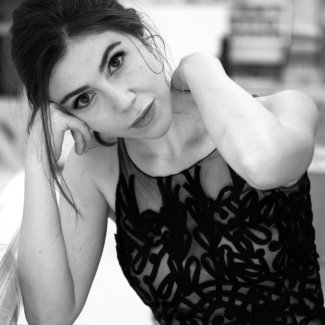
Gifted with a distinctive voice that combines brightness and warmth with agility and a richly rounded sound, French-American soprano Sandra Hamaoui has demonstrated through a series of acclaimed recent debuts that she stands on the cusp of a major international career. Hamaoui’s impressive repertoire spans Mozart, bel canto, and the great heroines of the French and Italian canon. Recognised for her dramatic insight, magnetic stage presence and instinctive musicality, Hamaoui is a favourite of directors and conductors alike.
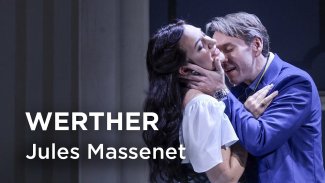
Fresh from a striking debut at Salzburger Festspiele, where her performances as Sophie in Massenet’s Werther under Alain Altinoglu attracted unanimous critical acclaim, Sandra Hamaoui builds further momentum in the 2026/2027 season with first appearances at Wiener Staatsoper and Opéra National de Paris among others. Returning to the role of Sophie, she joins Robert Carsen’s new production in Paris under Nathalie Stutzmann and appears in Vienna in a revival of Andrei Șerban’s celebrated staging under Marco Armiliato. She also makes her role debut as Micaëla in Carmen, marking her first collaboration with Opéra de Monte-Carlo, led by Marc Leroy-Calatayud, and returns to Opernhaus Zürich as Lisette in Christof Loy’s production of La rondine, again conducted by Marco Armiliato.
See more
A former ensemble member at Opernhaus Zürich, where she appeared as Gilda in Rigoletto, Nanetta in Falstaff and Gretel in Hänsel und Gretel, Sandra Hamaoui has since performed as a guest soloist on many major opera stages. Recent highlights include Sœur Constance in Robert Carsen’s production of Dialogues des Carmélites at Palau de les Arts Reina Sofía under Riccardo Minasi; Sophie in Christoph Loy’s Werther at Théâtre des Champs-Élysées with Marc Leroy-Calatayud; and Orff’s Trionfi, staged by Calixto Bieito at Staatsoper Hamburg and conducted by Kent Nagano. She has enjoyed success as Leïla in Les Pêcheurs de Perles at Théâtre des Champs-Élysées under Lorenzo Passerini, made her North American operatic debut as Adina in L’Elisir d’amore with Opera Naples under Ramón Tebar, and most recently returned to Opernhaus Zürich as Susanna in Le nozze di Figaro under Pierre Dumoussaud. Further recent engagements include Musetta in La bohème at the Gstaad Menuhin Festival and Festspielhaus Baden-Baden under Marco Armiliato, Juliette in Roméo et Juliette with both Orchestre de chambre de Genève and CulturArte de Puerto Rico, and acclaimed first performances as Violetta in La traviata at Teatro Padilla de Almería.
An experienced concert performer, Hamaoui’s repertoire includes the Requiems of Fauré and Mozart, Mahler’s Symphonies No.2 and 4, and Orff’s epic Carmina Burana, which she most recently performed at Leipzig Gewandhaus under Dennis Russell Davies.
Contacts
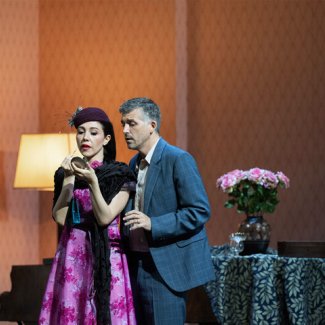
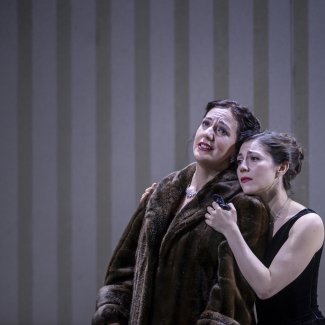
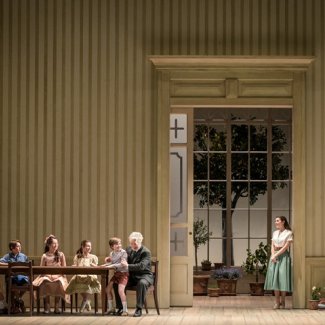
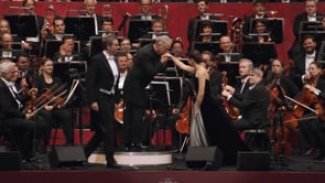
Gallery


“Sandra Hamaoui sets a completely different tone as Musetta. She is furious, fiery, dramatically present, and her soprano has that flexible, slightly coloratura sharpness that Musetta needs in the second act. Her voice can attack, seduce, play. She has rhythmic agility and understands that Musetta’s famous waltz is not an isolated showpiece. The character uses her voice as a social weapon.”
“Soprano Sandra Hamaoui (Musetta) offers the charm of youth, theatrical effrontery combined with vocal energy asserting itself from performance to performance. She signs here a colorful character with just the right amount of class not to sink into the vulgarity often attached to this role.”
“Mention should also be made of the charming and spirited Musette of Sandra Hamaoui, who displays impressive stage presence and evident musicality.”
Her voice is silvery, rounded, flexible and carries effortlessly. An exceptionally rewarding discovery.”
“Her soprano voice is imbued by an intriguing colour, slightly dark and velvety but with a certain weight that also allows the lower passages to sound well formed. At the same time, she possesses great agility and lightness of tone, combined with a steely, warm timbre in the upper register. Combined, these make Hamaoui’s interpretation multifaceted, at once youthful and spirited yet always suffused with a warm undertone.”
“Her focused, silvery voice shines in long lyrical phrases.”
“Sandra Hamaoui’s slender soprano brings the young Sophie to life with finely wrought coloratura.”
“One need not be a great prophet to predict a major career for the French-American lyric coloratura soprano Sandra Hamaoui. Far removed from the soubrette-like sound so often encountered in the role of Sophie, she creates, in both voice and stage presence, a self-assured young woman who knows perfectly well how to express her feelings for the man who, unfortunately, will never become her brother-in-law. In the third act, she becomes an utterly caring sister. Her voice is silvery, rounded, flexible and carries effortlessly.
An exceptionally rewarding discovery.”
“Sandra Hamaoui offered a fresh and luminous reading, with an agile and confident coloratura that conveyed the character’s youthful vitality. Her elegant phrasing and stage ease managed to capture the carefree spirit of “Juliette”, before the irruption of tragic fate.”
“Her clear, high-pitched soprano has increased in volume and brilliance and gives her the sovereignty on stage that makes her a credible string-puller.”
“Hamaoui, making her debut in Almería [as Violetta], stood out for having a voice well suited to the role, with a beautiful squillo that allowed her to approach the second and third acts with greater expressiveness and dramatic intensity.”
“As Sophie, Sandra Hamaoui deploys a dramatic tessitura as well as a brilliant timbre…The third act gives a glimpse of a technical agility with a remarkable naturalness.”
“Sandra Hamaoui lends her full-bodied voice and elegance to the sweet Sophie.”
“Sandra Hamaoui’s Sophie was sweet and endearing, and her light, enticing soprano glittered, singing of the joys of nature in ‘Du gai soleil, plein de flamme’.”
“Sister Constance, another novice, was sung by the Franco-American singer Sandra Hamaoui. She is Blanche’s lighter alter ego, a country girl imbued with joie de vivre. Hamaoui’s agile, bright coloratura contrasted beautifully with Marcellier’s lyric soprano.”
“Of the rest of the vocal cast, it is necessary to highlight the soprano Sandra Hamaoui for the freshness with which she introduced Sister Constance de Saint-Denis. A beautiful bell-like sound with a sufficient flow and good line.”
“Sandra Hamaoui put her light and transparent timbre at the service of Constance de Saint-Denis, achieving a solid character and perfectly in tune with her alter ego, Blanche, with whom she starred in some of the most inspiring moments of the evening.”
“The light and precise vocalism of the soprano Sandra Hamaoui shone.”
“Possessing a fresh voice, with a beautiful timbre, rich in colours and nuances, she stood out for her strength and the nobility of her singing. An excellent soprano.”
“Then Sandra Hamaoui, who was able to show off her bell-like lyric soprano perfectly even when singing headfirst, and whose “Dulcissime” sounded like a ‘greeting from heaven’…”
“In Carmina Burana, Sandra Hamaoui was particularly striking with her opulently shimmering soprano in the middle register, without neglecting the trebles.”
“Sandra Hamaoui played Lisette very well, the waitress who was also the victim of a dream, not of love, but of glory. Very good, she was able to make her character likeable, her singing and her interpretation delightful.”
“Sandra Hamaoui is extremely spirited and also very present with a great voice.”
“Also at a high level of Sandra Hamaoui as Lisette, Magda’s maid and Prunier’s lover. The agility that the score demands of her was solved with ease.”
“Her bright, silvery soprano gave life to the sparkling character; she showed beautiful high notes and great ease in the delivery.”
“Sandra Hamaoui’s Juliette acquires a real dramatic dimension that gives a striking relief to the duet with Romeo and then imbues her beautiful features with irrepressible anxiety in the confrontation with her father.”
“Juliette was none other than the exquisite Sandra Hamaoui.”
“Her appearance is an enchantment, her smile reflected in her voice, which unfolds the difficult coloratura of her entrance with ease and lightness. The soprano’s voice is particularly interesting: its coppery, sometimes somewhat dark reflections are not those of a light soprano, but rather of a lirico-leggero, which does justice to the dramatic impulses involved in the difficult – and long – role of Juliette.”
“On stage a very well-assorted cast, which has in Sandra Hamaoui perfectly cast as protagonist in the role of Alice, and very skilled in giving substance to the most lyrical and dreamy dimension.”
“Susanna, a marvellously lively and versatile Sandra Hamoui.”
“Her aria “Deh, vieni” was beautifully rendered, with smooth legato and a palpable, very effective sensuality in her delivery.”