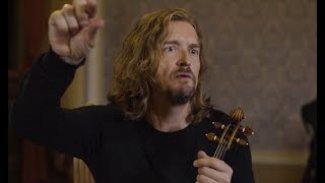
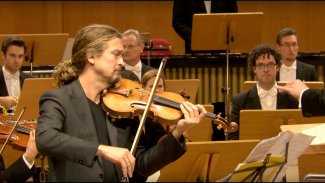
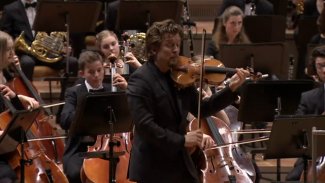
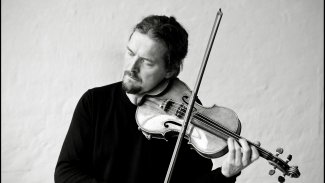
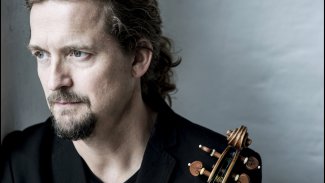
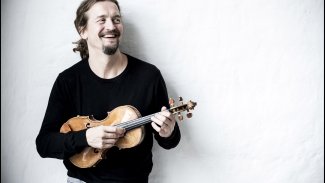
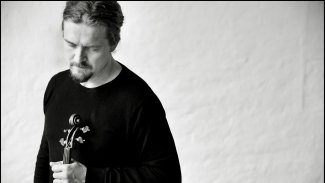
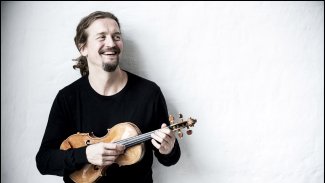
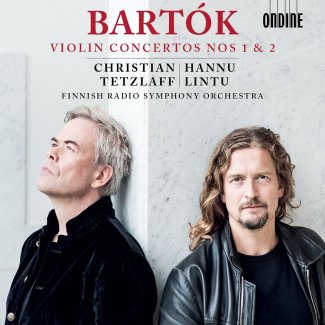
Christian Tetzlaff is regularly invited as Artist in Residence to present his musical views over a longer period, including with the Berliner Philharmoniker, Seoul Philharmonic Orchestra, and Dresdner Philharmoniker. In the 2021/22 season, he was given this honour at London’s Wigmore Hall and in 2022/23 he was “Portrait Artist” of the London Symphony Orchestra. In the 2024/25 season, Tetzlaff is Focus Artist at the Rheingau Music Festival as well as Artist in Residence at the Kammerakademie Potsdam.
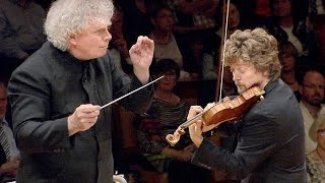
Over the course of his career, Christian Tetzlaff has made guest appearances with all the great orchestras, including the Berliner Philharmoniker, Wiener Philharmoniker, New York Philharmonic, the Concertgebouworkest in Amsterdam and all the London orchestras. He has worked with legendary Maestri such as Sergiu Celibidache, Bernard Haitink, Lorin Maazel, Kurt Masur and Christoph von Dohnányi. Close artistic ties have also been forged with Karina Canellakis, Daniel Harding, Paavo Järvi, Vladimir Jurowski, Andris Nelsons, Sir Simon Rattle, Francois Xavier Roth, Robin Ticciati, Esa-Pekka Salonen, Michael Tilson Thomas, Barbara Hannigan, Ed Gardner, Ingo Metzmacher, and Kent Nagano.
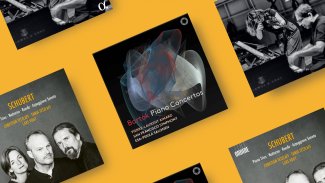
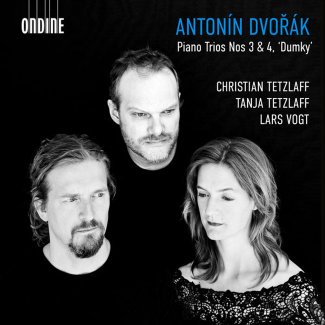
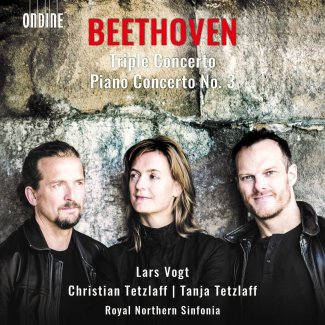
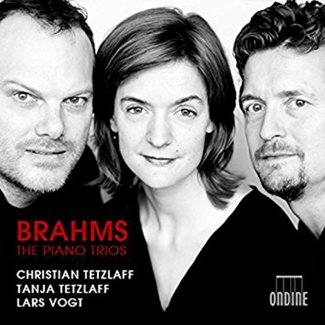
In 1994, Christian Tetzlaff together with his sister, cellist Tanja Tetzlaff, founded his own string quartet, and to this day chamber music is as close to his heart as his work as a soloist. Each year he undertakes at least one tour with the Tetzlaff Quartett, this season with concerts in the Berliner Philharmonie, Elbphilharmonie, London’s Wigmore Hall, Kölner Philharmonie, Philharmonie Luxembourg, and in the USA with concerts in New York, San Francisco, Yale Univerity and more. The Tetzlaff Quartett was awarded the Diapason d’or in 2015, and in 2016, the trio, with his sister Tanja Tetzlaff and pianist Lars Vogt, was nominated for a GRAMMY award. The trio’s last recording of works by Schubert was only released after Lars Vogt’s untimely passing, and was awarded the OPUS Klassik for best chamber music recording in 2023. This season, Christian Tetzlaff will also join Kiveli Dörken in a duo in Japan, and as a piano trio with his sister Tanja Tetzlaff in the Wigmore Hall, among other places.
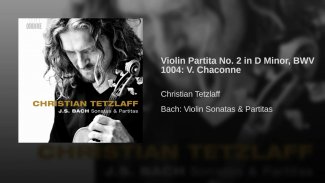
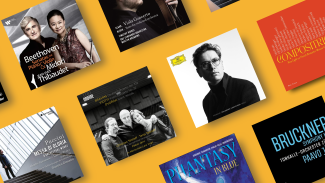
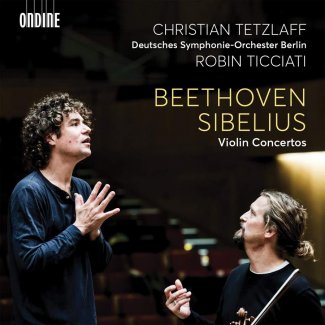
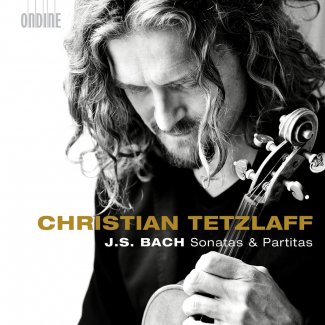
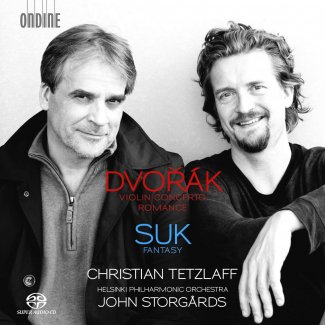
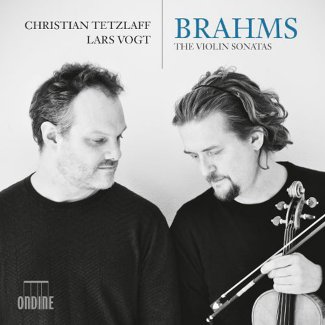
Christian Tetzlaff has also received numerous prizes for his recordings, including the ‘Jahrespreis der Deutschen Schallplattenkritik’ and the ‘Diapason d’or’ in 2018 and the Midem Classical Award in 2017. Bach’s Sonatas and Partitas are of particular significance to him, which he recorded for the third time and released in September 2017. The Strad magazine praised this recording as “an attentive and lively answer to the beauty of Bach’s solos”. The Ondine label released the recording of the Beethoven and Sibelius violin concertos in autumn 2019, followed by Brahms and Berg in August 2022 — both with the Deutsches Symphonie-Orchester Berlin conducted by Robin Ticciati.
Born in Hamburg in 1966 and now living in Berlin with his family, there are three things that make this musician unique, aside from his astounding skill on the violin. He interprets the musical manuscript in a literal fashion, he perceives music as a language, and reads the great works as narratives that reflect existential insights. As obvious as it may sound, he brings an unusual approach in his daily concert routine.
Christian Tetzlaff tries to fulfill the musical text as deeply as possible without indulging in the usual technical shortcuts on the violin, often allowing a renewed clarity and richness to arise in well-known works. As a violinist, Tetzlaff tries to disappear behind the work, and paradoxically, this makes his interpretations very personal.
Secondly, Christian Tetzlaff “speaks” through his violin. Like human speech, his playing comprises a wide range of expressive means and is not aimed solely at achieving harmoniousness or virtuosic brilliance.
Significantly, Tetzlaff played in youth orchestras for many years. In Uwe-Martin Haiberg at the Lübeck Music Academy, he had a teacher for whom musical interpretation was the key to mastering violin technique, rather than the other way around.
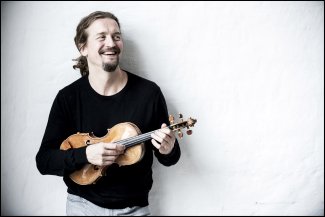
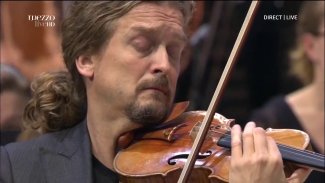
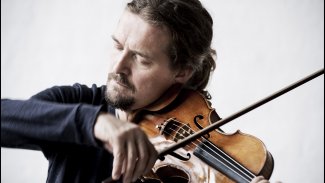
Christian Tetzlaff plays a violin by the German violin maker Peter Greiner and teaches regularly at the Kronberg Academy.