OVERVIEW
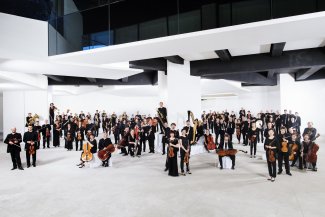
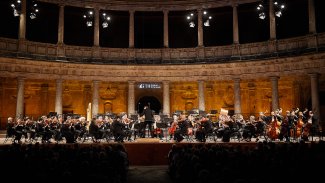
Arguably France’s flagship orchestra, the Orchestre de Paris was founded in 1967 as a worthy successor to the Société des Concerts du Conservatoire, the earliest French symphony orchestra, and has its permanent residence at the Salle Pleyel. The orchestra offers a vast repertoire extending from symphonic works to opera and the music of our own time. Paavo Järvi became Music Director of the Orchestre de Paris at the start of the 2010/11 season, following in the footsteps of some of the world’s most distinguished conductors, and after just seven months his contract has been extended to the end of the 2015/16 season. HarrisonParrott is delighted to be working with the Orchestre de Paris on a selection of international tours.
REVIEWS
"Paavo Järvi conjured up incredibly wonderful pianissimos with his orchestra. Never before have I heard the leading motif in the final of Sibelius’ Valse Triste (perfomed as an encore and probably intentionally dedicated to this audience) played so quietly, that it created an image as though the grief which was wrapped up within the sounds came from as far away as Finland. Anyway, I just managed to hold back my tears of emotion."
"A life-affirming final of Bartok's most famous oeuvre, the last complete masterpiece Concerto for Orchestra was so explosively powerful that when Paavo Järvi stretched his arms up high for the final notes, there was a sense that the ceiling of the concert hall would be raised." (Postimees.ee, September 2011)
“The Parisian orchestra, with its characteristic magnificent sound, responded to each gesture with dramatic tension that helped bring out the lyricism and the wonderful biting sonority in some of the passages in Sibelius’s score, a worthy successor to Anton Bruckner’s symphonic style.” (Sonorama, January 2011)
“Paavo Jarvi and the Orchestre de Paris's delicately shaded recording attempts a silk-purse makeover on the piglet's ear of Bizet's juvenile Symphony in C, lendinglustre to the adagio, grit to the bagpipe drone of the scherzo, and Mendelssohnian fizz to the allegro vivace.” (The Independent, October 2010)
“Two of Bizet’s most popular orchestral works are given sunny performances by the Orchestre de Paris, bringing both charm and freshness to the Symphony in C and the five pieces of Jeux d’enfants. If these two works show Bizet at his most breezily genial, Roma has higher dramatic aspirations. A hybrid of symphony and suite, it is not perhaps especially evocative of Rome but it contains some lovely and seldom heard music, here played luminously.” (Daily Telegraph, September 2010)