Home > Artists > Eivind Gullberg Jensen

BIOGRAPHY

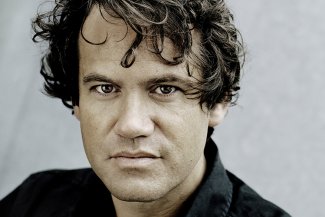
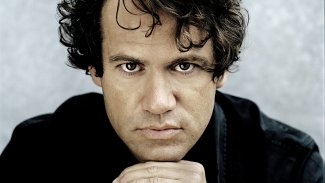
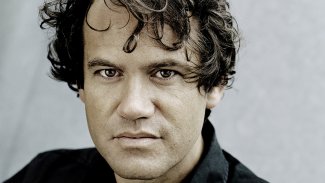
Chief Conductor: NDR Radiophilharmonie Hannover


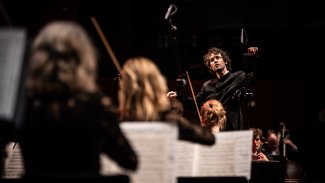
Future dates for Gullberg Jensen see him returning to the Oslo Philharmonic Orchestra, Münchner Philharmoniker and Wiener Symphoniker as well as making debuts with the Rotterdam Philharmonic Orchestra, Göthenburg Symphony Orchestra, Bamberger Symphoniker, Orchestre Philharmonique du Luxembourg, Orchestre Nationale de Belgique, Orchestre National de Lyon and Konzerthausorchester Berlin. Previous seasons have seen Gullberg Jensen conduct the Berliner Philharmoniker, Netherlands Radio Philharmonic, Deutsches Symphonie-Orchester Berlin and WDR Sinfonieorchester.

On the opera platform, he conducts Rusalka at the Opernhaus Zürich and Fidelio with the Bayerische Staatsoper.

His recent recording of the Nielsen and Tchaikovsky Violin Concertos featuring soloist Vilde Frang and the Danish Radio Symphony Orchestra was awarded ‘Preis der Deutschen Schallplattenkritik’ in August 2012. 

MORE  »
The short biography displayed on this page is for information only. For concert programmes and promotional materials please use the downloadable versions.

REVIEWS

“High concept productions often demand musical distensions but, when heard and not seen, this La Boheme is vital…full of discipline and integrity, thanks, no doubt to conductor Eivind Gullberg Jensen.” (David Patrick Stearns Gramophone, February 2013)

“Musically, there is much to admire here, starting with the highly idiomatic and impassioned conducting of Gullberg Jensen. He is quickly gaining fame in both the symphonic and operatic worlds for his work, and one can hear why. This is a beautifully shaped and paced Bohème, and is well played by his orchestra. The climax he builds up to in the second act is truly magnificent.” (Henry Fogel, Fanfare, March 2013)

"It was a superb Shostakovich that Eivind Gullberg Jensen delivered at the Philharmonie. The 41-year-old Norwegian powered the WDR Symphony Orchestra to a peak performance…Soulful cantilena, tempo, rhythmic clarity, a wide dynamic: all the qualities in the baton of a true maestro." (Koelnische Rundschau, July 2012)

"The soft, yet precise direction from Eivind Gullberg Jensen left the audience on the edge of their seats, teasing out both tonal and elegant instrumental details from the orchestra…so resolute and convincing was the interpretation from Gullberg Jensen, you didn’t miss any of the magical classicism. Certainly one of the best philharmonic concerts in this season." (Klassikinfo, June 2012)

"Gullberg Jensen managed to sound the real richness of detail of this virtuosic score in the fast changing, nervous, painful, threatening, grotesque, dramatic and ambiguous themes.” (Opernwelt, March 2012)

"The conductor Eivind Gullberg Jensen adapted the orchestra to the tight musical frame. It was a performance about beautiful passion, not bloodlust. Puccini wouldn’t have had to take too deep a breath in order to be bursting with pride.” (Vårt Land, January 2012)

"This opera makes high demands on the artists. To experience the close and detailed collaboration of the orchestra and the singers under the baton of Eivind Gullberg Jensen is simply overwhelming. ” (Aftenposten, January 2012)

"The conductor of this highly celebrated evening in the Philharmonie was the Norwegian whizzkid Eivind Gullberg Jensen... who possesses great sensitivity and temperament, he encouraged the orchestra to play on brilliant form and allowed the pieces to show their true character." (Kölner Stadt-Anzeiger, May 2011)

"Eivind Gullberg Jensen projects his own musicality in this uninhibited, subjective interpretation. This is no ordinary performance, but a truly romantic interpretation of the piece with a beat that resonates in the listener's consciousness. Even the melancholic waltz movement had an unexpected optimism about it." (Svenska Dagbladet, February 2011)

"Gullberg Jensen found great moments in Sibelius' Second Symphony…The brass exposed Bruckner-like radiance, and the rich, golden string sound ennobled the searching beginning and unfolded with fascinating force in the gigantic final climax." (Klassikinfo.de, August 2010)