Home > Tours & Projects > Tonhalle-Orchester Zürich

OVERVIEW

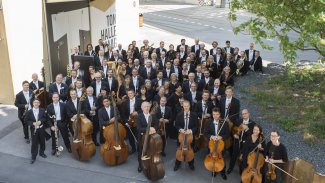
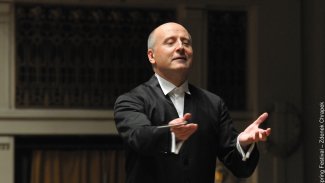
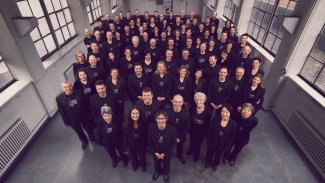
David Zinman was appointed Music Director and Chief Conductor of the Tonhalle-Orchestra Zürich in 1995; since then the orchestra has earned the respect and admiration of audiences throughout the world. HarrisonParrott have a long and fruitful collaboration in touring projects with the Orchestra, with regular appearances at both the BBC Proms and Edinburgh Festivals.

MORE  »
The short biography displayed on this page is for information only. For concert programmes and promotional materials please use the downloadable versions.

REVIEWS

“In short, Zinman has produced one of the best modern accounts I’ve heard. His ear for clean orchestral textures produces a first movement that has just the right sort of lucidity as well as a thrilling pace...Zinman and his orchestra phrase so intelligently – really breathing with the music – and orchestral balance is impeccable as well as clear..." (International Record Review, November 2012)

“Zinman brings such a musicianly personality to everything he touches: phrasing and articulation are completely natural, without a trace of the overemphatic leanness of period instrument performance, but equally avoiding the lugubriousness of 20th century tradition. Together with his immaculately balanced Zurich orchestra, the Tonhalle, he captures the wit and lilt of the Third Symphony, in a way that makes it sound like a young cousin of Haydn’s ultra-civilised London symphonies. The weightier Fourth, subtitled “Tragic”, is treated to an equally fresh performance." (Financial Times, August 2012)

“The Tonhalle and Zinman come up with another winning coupling of Nos 3 and 4… The spry, lucid performances generate just the right kind of atmosphere of classical poise and romantic aspiration.” (The Daily Telegraph, August 2012)

“Firm accents, punchy rhythms and muscular playing give this performance  of Schubert’s “Unfinished” (here numbered 7 rather than the usual 8) a distinct impetus, clarity of definition and a powerful aura of B minor foreboding, without any loss of melodic geniality in the second movement. “ (The Daily Telegraph, February 2012)

“These are splendid performances, passionately felt and never losing sight of the architecture. The orchestra under David Zinman is on top form. I like his choice of tempos – alert and dynamic throughout the fast movements, never too slow. The recording, too, is unusually well balanced, lending clarity to the subsidiary lines.” (Brahms: Symphonies - BBC Music Magazine, December 2011)

“Tchaikovsky comes across with freshness and depth of feeling, fostered by Sokolov’s lustrous tone. There is brilliance without ostentation, qualities that apply equally to the Bartók, with the Tonhalle Orchestra providing a luminous backcloth.” (Bartók/Tchaikovsky: Violin Concerto - The Telegraph, October 2011)

"Zinman’s way with the music may be less revelatory than was his 1990s set of the Beethoven symphonies, but they represent a kind of mainstream Brahms, utterly devoid of mannerism and interpretational quirks, with a fine central European orchestra playing at the top of its game. Zinman gives due weight to the vigorous, dramatic “bookend” movements of the C minor (No 1) and F major (No 3) symphonies, and to the rigorous passacaglia finale of the E minor (No 4), but he relishes the chamber-like writing, above all for horn and woodwind solos in the “intermezzo” movements that are such striking features of Brahms’s symphonic style." (Brahms: The Symphonies - The Times, October 2011)

"...the overall effect was tremendous. As was David Zinman’s reading of Beethoven’s Symphony No 3, with his Tonhalle-Orchester Zürich. The detail was spotless, the tone and timbre light and scrupulous. It was a performance without period affectations, but with its own streamlined dynamism, fleet tempi letting the architecture of the first movement become more, not less, apparent. Recasting an early passage in the finale for glinting string quartet, rather than full strings, was a lovely intervention. This is clearly an orchestra of soloists. Like the Chamber Orchestra of Europe, appearing at the previous week’s Proms, the players can’t keep themselves from swaying: each one gives their all.” (The Sunday Times, September 2011)

“When Pires plays Mozart, there is a sense of the music composing itself. Every lightly and instinctively shaped phrase, every dynamic tint and nuance, every breath shared with the orchestra comes over as transmission, rather than calculated interpretation — and this is rare indeed. Listener, performer and work become as one, as Pires draws both audience and players into her gentle insights. The work becomes new-born. This concert, which ended with Zinman’s lean, vividly voiced take on Beethoven’s Third Symphony, had begun with the British premiere of the Swedish composer Anders Hillborg’s Cold Heat. This artfully shaped, 13-minute symphonic poem is patterned by the cries and wingbeats of birds: a powerfully crafted landscape of slow-moving ice floes and ice screams, voiced by layers of strings striated by heavy brass chords and tingling percussion.” (The Times, September 2011)

“Pires’s every phrase had a truthful expressiveness, and David Zinman and the Tonhalle Orchestra Zurich brought perfect balance to their side of the musical conversation: in the Larghetto, piano and orchestra together projected a wonderfully tender stillness.” (The Independent, September 2011)