Home > Artists > Maurizio Pollini

BIOGRAPHY

In 2010/11 Pollini brought his personal vision to the concert hall for The Pollini Project - a highly acclaimed five recital series at the Royal Festival Hall, London - which took the audience on a journey through the development of piano music from Bach through late Beethoven, Schubert and Chopin, to Boulez and Stockhausen and for which he won a Royal Philharmonic Society award.

Pollini has a broad repertoire ranging from Bach to contemporary composers and has recorded works from the classical, romantic and contemporary repertoire to worldwide critical acclaim. His recordings of the complete works for piano by Schoenberg, and of works by Berg, Webern, Nono, Boulez and Lachenmann are a testament to his great passion for music of the 20th century and beyond. 

MORE  »
The short biography displayed on this page is for information only. For concert programmes and promotional materials please use the downloadable versions.

REVIEWS

“A programme which ended with a dense and driven performance of Liszt’s B minor Sonata travelled there via four of the bleakest pieces he ever wrote. Two foretold his own death; and two mourned the death of his great friend, Richard Wagner. Pollini’s prowess in exploring the avant-garde European masters enables him to relish Liszt himself doing battle with tonality. The grey clouds of Nuages gris gathered and massed in the menacing rumbling of Pollini’s powerful left hand. And the right hand delineated its tiny grotesque motif, brightening to the pallid light of two exquisitely spread chords. Then Unstern! sinistre, disastro, as spooky as its title, with Pollini’s fingers drawing out spectres of funeral march, tolling bells and deafening tremolandos, followed by disquieting hushed chords. Pollini chose the first, shorter version of La lugubre gondola, Liszt’s premonition of Wagner’s death in Venice; and then, out of the suffocating darkness of its wake, strode into R.W. — Venezia, his hands clawing their way up the keyboard to a climax of searing grief.” (Hilary Finch, The Times, March 2012)

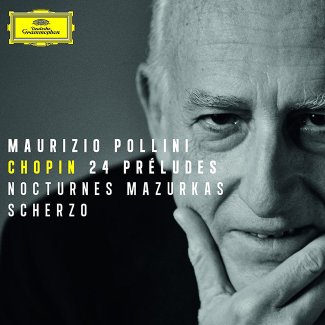
 “... last week at the Festival Hall, bringing his extraordinary Pollini Project to a triumphant close. At nearly 70, he still plays Chopin with the ease that floored even Rubinstein more than 50 years ago. His five-concert project promised to take his audience on a keyboard odyssey from Bach to Boulez and last Tuesday saw the final leg of the voyage: Chopin, Debussy and Boulez. We cast off with the 24 Preludes, Pollini moving steadily through the tricky waters in his matter-of-fact way. Some might think it clinical but Pollini knows that all the emotion is there on the page; it needs no histrionics… There was no doubting the firepower still available in that thunderous left hand as he crashed through the fury of No.22.” (Stephen Pritchard, The Guardian, July 2011)

“Maurizio Pollini’s Project at the Festival Hall takes us to a new musical universe.” (Paul Driver, The Sunday Times, June 2011)

“The naming of the Pollini Project is significant. The pianist’s survey of repertoire from Bach to Boulez has not been so much a pilgrimage as a series that has set out to challenge, to educate and to cross-reference.” (Hilary Finch, The Times, May 2011)

“Nowhere was this more so than in No 11 in the set, in which the swirling dexterity and pulsating rhythmic drive of the A minor Winter Wind study seemed to leave the 19th-century behind and vault forward into the 20th. This was a Chopin recital of the highest seriousness, with Pollini the right man for the occasion, making an irresistible case for Chopin as one of the greatest of all musical innovators.” (The Guardian, March 2010)

“As his last couple of London recitals have demonstrated, Maurizio Pollini is on magisterial form at the moment, and this carefully planned Chopin sequence, grouping together the works of Opp 34 to 36 with Op 38, provides a document of this golden period in his playing career. He has recorded the two major works here, the second Ballade and the B flat minor Sonata before, but both of these are titanic performances, full of perfectly focused power and high-tensile lyricism... On this kind of form, Pollini has few pianistic peers in the world today.” (The Guardian, October 2008)

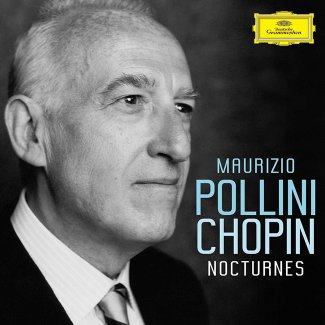
“Pollini's interpretative authority and transcendent technique are well known. What is significant here is the way in which he fine-tunes these to the very special demands of the Nocturnes… These are readings that take the long view, are unconcerned with immediate gratification, and bear much repeated listening. Only a great artist can reconcile opposites in the way that Pollini achieves here. He attends to Chopin's exquisite musical surfaces while sounding their depth.” (International Record Review, 2005)