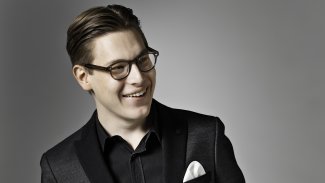
Klaus Mäkelä
“Here was something truly special: a conductor who revelled in freshly imagining each sound.”
(The Times, 2021)
Music Director: Orchestre de Paris
Chief Conductor Designate: Royal Concertgebouw Orchestra
Music Director Designate: Chicago Symphony Orchestra
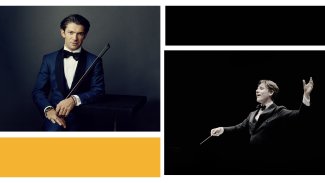
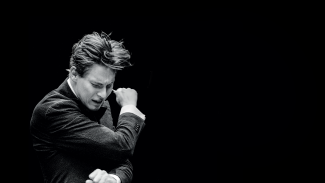
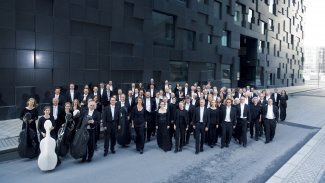
Finnish conductor Klaus Mäkelä has been Music Director of the Orchestre de Paris since September 2021 and served as Chief Conductor of the Oslo Philharmonic from 2020 to 2026. He assumes the title of Chief Conductor of the Royal Concertgebouw Orchestra in September 2027 and, in the same season, begins his tenure as Zell Music Director of the Chicago Symphony Orchestra.
Mäkelä’s final season as Music Director of the Orchestre de Paris marks the culmination of a seven-year artistic partnership, with programmes centred on large-scale choral and symphonic repertoire, including Berlioz’s Roméo et Juliette and Mahler’s Symphonies No.3 & 8. This season also includes the world premiere of a new work by Thomas Larcher, Beethoven’s Triple Concerto with Martha Argerich, Renaud Capuçon and Gautier Capuçon, and a gala concert at Philharmonie de Paris featuring Stravinsky’s Le Sacre du printemps, a work that has become a defining thread of his collaboration with the orchestra.
Show More
Season highlights with the Royal Concertgebouw Orchestra include Beethoven’s Missa solemnis, Mahler’s Symphony No.7, Schumann’s Symphony No.1, Bartók’s Bluebeard’s Castle, Lotta Wennäkoski’s Flounce, and the world premiere of a new work for orchestra by Magnus Lindberg. In December, Mäkelä conducts the Amsterdam Christmas Matinee for the fifth time, and internationally he leads the orchestra on tours to France, Germany, Austria, Hungary and Spain, before returning to the Baden-Baden Easter Festival, for the second installment of the orchestra’s annual residency, where they present three programmes.
With the Chicago Symphony Orchestra, Mäkelä opens the season with a three-week residency at Symphony Center, including performances of Stravinsky’s Petrushka, Mahler’s Symphony No.9 and Walton’s Belshazzar’s Feast, with soloist Thomas Hampson. In January 2027, he leads the orchestra on its first international tour under his direction, with performances in eight cities across Europe. The season also includes an all-Finnish programme pairing Sibelius’s Symphony No.1 with works by Magnus Lindberg, and concludes with Beethoven’s Symphony No.9 and Boulez’s rarely performed Le soleil des eaux.
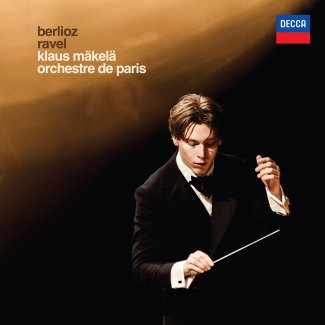
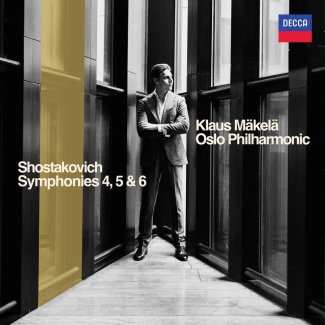
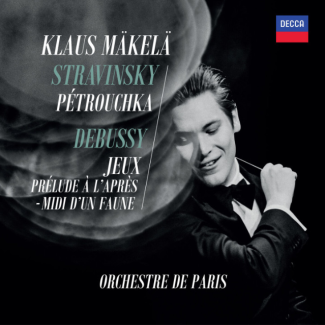
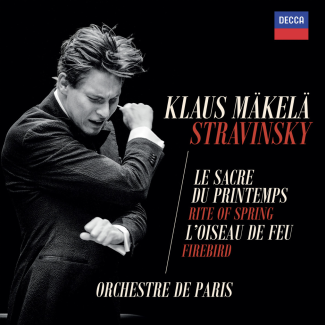
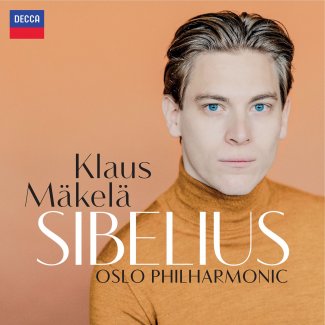
An exclusive Decca Classics artist, Mäkelä’s discography includes recordings of works by Stravinsky, Debussy, Berlioz and Ravel with the Orchestre de Paris, as well as symphonies by Sibelius and Shostakovich with the Oslo Philharmonic. His most recent recording is Mahler’s Symphony No.8, captured live with the Royal Concertgebouw Orchestra at the 2025 Mahler Festival.
In the 2026/27 season Mäkelä appears as guest conductor with the Wiener Philharmoniker, Berliner Philharmoniker, Orchestra del Teatro alla Scala, London Symphony Orchestra, Symphonieorchester des Bayerischen Rundfunks and Münchner Philharmoniker. As a cellist he partners with members of the Orchestre de Paris, Concertgebouw Orchestra and Chicago Symphony Orchestra for chamber music performances.
Contacts
Jasper Parrott Executive Chairman HP Group & Associated Companies Dáire Ní Chonaill Associate Artist Relations Manager
worldwide general management
Dáire Ní Chonaill Associate Artist Relations Manager
worldwide general management
“Mäkelä and the players fed off each other’s energy to produce a performance that one hopes was as breathtaking for them to play as it was for the audience to hear … The shattering end of the Rite brought the audience instantly to its feet.”
“The Oslo Philharmonic’s stripped-down opera performance (of Bartok’s Duke Bluebeard’s Castle) let the music speak for itself … Mäkelä emphasised the different voices so clearly and distinctly that it was like seeing the score in front of you. Truly brilliant, world-class playing.”
“Mäkelä managed to reveal unsuspected details throughout (Mussorgsky’s Pictures at an Exhibition), with the brilliant orchestra always as his excellent instrument. And when we arrived in amazement at The Great Gate of Kiev, the orchestral floodgates opened at exactly the right time. You felt moved by a performance by a legendary maestro from the past.”
“… Mäkelä’s sure-footed gestures and the relief he gives to details and accents (in Tchaikovsky’s Nutcracker) never lose sight of the wonder of childhood, with its smiles and thrills. Throughout, the musicians of the Orchestre de Paris cultivate a transparency, a shimmer, a delicate breath that seems to draw Tchaikovsky’s score towards French music … and the conductor’s sense of storytelling is matched by his panache.”

“Throughout the evening, the Finnish conductor managed to balance the tension, speed and colours in a meaningful way … Throughout all six movements (of Mahler Symphony No. 3) he showed an iron control, using emphasis and contrasts sparingly so that all his choices really meant something.”

“Makela’s close attention to colouring individual phrases, particularly in the strings, created a beautifully cantabile effect (in Sibelius Symphony no. 7). There was magic, even devilry, in the fast middle part, and scrupulous balance between the sections. Pure refreshment.”
“Klaus Mäkelä’s Sixth by Shostakovich sounds haunting from the first bar of the opening Largo, gripping, intense … All shades of gray are filtered out, the music develops a surprising singularity, an inner glow, awakens associations with nature.
“ … Mäkelä’s Tchaikovsky, while not profound, proved terrific … His style of leadership is both commanding and spontaneous. His imprint is personal.”