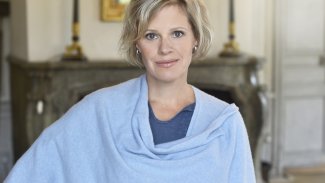
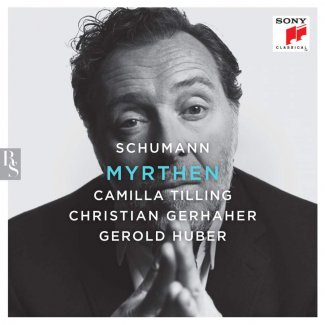
Camilla Tilling
“Tilling sounds at the height of her powers, her voice still limpid, fresh and youthful, her interpretative skills those of a mature artist.”
(The Sunday Times)
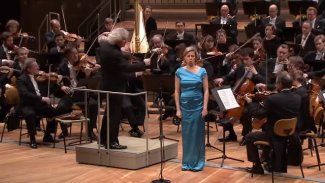
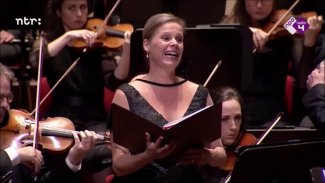
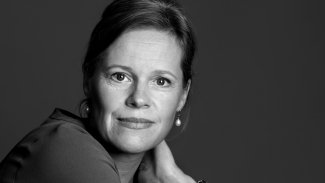
One of Sweden’s most accomplished vocal talents, Camilla Tilling’s radiant soprano and exceptional artistry have secured her admiration from conductors, audiences and critics alike across an enduring international career on the major opera, concert and recital stages of the world.
One of today’s most sought-after concert performers, Tilling has recently performed under Gustavo Dudamel with the Royal Concertgebouw Orchestra and Los Angeles Philharmonic in Mahler, Symphony No. 4, with Esa-Pekka Salonen and the Philharmonia Orchestra in Schoenberg, Gurrelieder, and with Gianandrea Noseda and the National Symphony Orchestra in Beethoven, Symphony No. 9. Tilling has toured extensively in Peter Sellars’ stagings of Bach’s St Matthew Passion and St John Passion with Berliner Philharmoniker and Sir Simon Rattle, and her artistic journey was profoundly shaped by a close musical bond and regular collaboration with the late Sir Bernard Haitink. She was the soloist of choice for his historic final concerts in 2019, singing Strauss, Vier letzte Lieder with Radio Filharmonisch Orkest at Amsterdam’s Concertgebouw.
Show more
As part of her 2026/27 season, Camilla Tilling reprises Daniel Nelson’s Chaplin Songs with Göteborgs Symfoniker under Andrew Manze, sings Britten, Les Illuminations with Swedish Chamber Orchestra under Lorenza Borrani, and joins Norrköping Symfoniorkester in a curated programme of Mozart and Strauss, conducted by Karl-Heinz Steffens. She returns to Oxford Lieder Festival in a programme of Schubert and Mahler, together with pianist Sholto Kynoch.
Consistently in demand for the concert stage, Tilling’s recent highlights include Debussy, La Damoiselle élue with Donald Runnicles and Sydney Symphony Orchestra, Irgen-Jensen’s Japanischer Frühling with Christian Blex and Karajan-Akademie of Berliner Philharmoniker, Mendelssohn, Paulus with Orquesta y Coro Nacionales de España under Masaaki Suzuki, and Michael Haydn, Requiem with Münchner Philharmoniker under Riccardo Minasi. With Sveriges Radios Symfoniorkester she sang Ravel, Shéhérazade under Nicholas Collon, Mahler, Symphony No. 4 and Rückert-Lieder with Cincinnati Symphony Orchestra and Tabita Berglund, and Bach, Mass in B minor with Atlanta Symphony Orchestra under Nathalie Stutzmann. Alongside the classical repertory with which she has been so strongly associated, Tilling has recently embraced a number of contemporary works, including Golijov’s Three Songs for Soprano and Orchestra with David Danzmayr and Oregon Symphony, Dutilleux, Correspondances with Omer Meir Welber and Orchestre national de France, and the world premiere of Daniel Nelson’s award-winning oratorio, Chaplin Songs, with Sveriges Radios Symfoniorkester under Andrew Manze.
A prolific performer on the opera stage, there have been recent role debuts at Royal Swedish Opera, including Blanche de la Force (Dialogues des Carmélites), Suor Angelica and Contessa Almaviva (Le nozze di Figaro), and with Orchestre national de Lyon as Donna Elvira in concert performances of Don Giovanni. Early standout roles such as Sophie (Der Rosenkavalier), Pamina (Die Zauberflöte), Ilia (Idomeneo), Susanna (Le nozze di Figaro) and Zerlina (Don Giovanni) marked pivotal debuts for Tilling at Royal Ballet and Opera, Covent Garden, Opéra national de Paris, Teatro alla Scala and the Metropolitan Opera. Her portrayal of Mélisande (Pelléas et Mélisande) brought her to stages of Teatro Real Madrid, Semperoper Dresden, Finnish National Opera and Los Angeles Philharmonic, she debuted as Donna Clara (Der Zwerg) at Bayerische Staatsoper and as The Governess (The Turn of the Screw) at Glyndebourne Festival.
An accomplished recitalist, Tilling has recorded many Lieder collections by composers including Strauss, Schumann, Schubert and Grieg. She toured widely with her acclaimed “Swedish Nightingale” programme, Jenny Lind: Love and Lieder, including in North America with renowned pianist Emanuel Ax, and has performed regularly at Bergen International Festival, Oxford Lieder Festival and London’s Wigmore Hall. Her impressive discography also includes orchestral works by Haydn with Bernard Haitink, Handel and Purcell with Emmanuelle Haïm, Grieg with Paavo Järvi, Brahms with Marek Janowski, Cherubini with Riccardo Muti and a critically acclaimed solo collection of Mozart and Gluck arias.
Contacts
General Management
General Management
Gallery
“Soprano Camilla Tilling brought crystalline clarity and agility to the “Laudamus te” and “Domine Deus,”
“Tilling was the ideal soprano for the final “Wunderhorn” movement, a picture of heavenly bliss seen through the eyes of a child. The soprano entered the stage with head bowed. When she lifted her gaze to the audience and began singing, you could not have asked for a better storyteller. She performed each verse with character, engaging personality and beautiful tone. Even the softest high notes, which are so difficult, were radiant.”
‘’He (Jonathan Nott) took the fourth movement at a lively, flowing pace, and this is where Camilla Tilling truly shone. The soprano impressed with her bright, clear tone, flawless diction, and a folksong‑like naturalness that made Mahler’s melancholy almost tangible.’’
“The finale was lovely, with Swedish soprano Camilla Tilling floating her notes sweetly over the orchestra. She fully grasped the conceit of the text – it is a child’s view of heaven – and launched into the descriptive passages portraying feasts of plenty with enthusiastic, wide-eyed wonder that came through charmingly in the notes. As the music dissolved in bliss at the end, the performers held still for an extended time before letting the spell break into a hearty ovation.”
“The set closed with ‘How Slow the Wind’, a combination of two short poems by Emily Dickinson. For most of the song, the soprano arched slowly over the roiling textures beneath her voice, before being drawn into the turmoil near the end. Tilling used the acoustics of the hall to float her voice intimately, never having to force her tone to sound out, and brought a sense of total commitment to the moody songs. Absolutely riveting.”
‘’Among the women, the sumptuous voice of Camilla Tilling stands out, a Countess perfectly centered in character, impeccable in emission, full of dynamic and expressive variations.”
‘’ Ms. Tilling’s beautiful voice finds its ideal showcase in “Solveig’s Song” where she pledges to wait however-so long till they meet again — even if that’s only in heaven. The sweet purity of her voice fills the moment with utter serenity. In the vocalise passages she becomes a very lark.’’
‘’Making her TSO debut, Swedish soprano Camilla Tilling proved to be a superb advocate for these gorgeous songs. Her warm but clear tone, vocal agility and sheer musicality was a constant delight. She effortlessly conveyed the wide range of mood and emotion, from the drama of Um Mitternacht to the inwardness and pathos of my personal favourite from all Mahler’s lied Ich bin der Welt abhanden gekommen (I am Lost to the World). ‘’
“Swedish soprano Camilla Tilling proved to be a superb advocate for these gorgeous songs [Mahler’s
Rückert Lieder]. Her warm but clear tone, vocal agility and sheer musicality was a constant delight.”
‘’As a penitent (namely, Faust’s erstwhile lover, Gretchen), one was struck by Camilla Tilling’s vocal purity, fittingly echoed by the children’s choir. ‘’
“…one was struck by Camilla Tilling’s vocal purity, fittingly echoed by the children’s choir.”
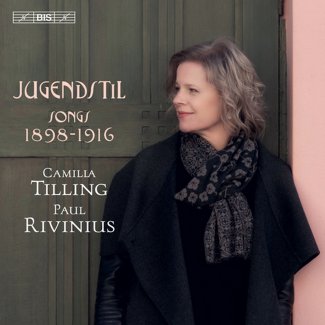
“Camilla Tilling is on ravishing form in this beautifully paced album of Romantic and Expressionist songs” [Jugendstil; BIS records]
“Camilla Tilling provided the evening’s most genuinely consoling moment, in her melting rendition of the fifth movement [in Brahms’s German Requiem]”
“It’s difficult to resist the purity of her sound, the loveliness of her pearly, bright tone…Tilling bringing beguiling tone and unfailing musicality…”
“for his farewell, Haitink conducted the Radio Philharmonic Orchestra of the Netherlands in five orchestral songs by Richard Strauss, with Camilla Tilling as a very fine soloist”
“Tilling… was rapturous in her ecstatic evocation of ‘death, the reviver of beauty’”
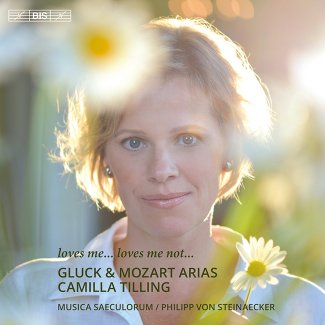
“In this outstandingly accomplished selection of 18th-century operatic arias, Camilla Tilling demonstrates just how rewarding such albums can be when executed with the most genuine kind of musico-dramatic artistry. The eminent Swedish soprano…[has] the sort of fine-grained delivery – in equal part vocal and verbal, whether in French or Italian – that results in a parade of ‘real people’ stepping out in three dimensions before the listener’s delighted ears. Tilling’s fresh-sounding soprano is, on this showing, a protean Classical instrument…everywhere employed with such unassailable technical mastery, such control of breath support and easy flow of phrase, that not even the extravagant high-and-low flourishes of Fiordiligi’s ‘Come scoglio’ emerge flustered or short-changed…this CD [is] a truly remarkable achievement.” *****
“her voice has expanded in its range of colours without losing the precision of the line or technique. [Tilling] gives us musical purity without ever sacrificing the text…she gives us superb recitative and dynamic mastery…A rare find.”
“Her voice remains fresh and peachy, is well-knit through its registers, and she sings with an unaffected directness, allowing the music to speak for itself” *****
“Ilia is one of Tilling’s favourite roles and she sings two of the arias, ‘Padre, germani, addio’ and ‘Zeffiretti lusinghieri’, with a silvery grace, enlivened by the occasional hint of a fast vibrato. Her Susanna and Countess are nicely differentiated, the latter’s ‘Dove sono’ touchingly inward at the reprise…’Come scoglio’ is where this disc takes off with a newly urgent sense of drama, and ‘Per pietà’ makes a virtue of her lightness of voice…Of the Gluck, the most engaging is the intensely felt ‘Che fiero momento’ of Eurydice, a role Tilling has portrayed notably on stage. It is good to have Armide’s Act 2 aria, ‘Ah! Si la liberté’, and she is deeply affecting in it…Everything here is well judged and sympathetically sung’
“‘Come scoglio’ (preceded by an excitingly incisive delivery of the ‘Temerari!’ recitative) rivets the listener; there’s security at both ends of the range, the requisite flexibility, and vivid projection of both the character’s outrage and her unquenchable fidelity.”
“It says something — not especially complimentary — about the classical record industry that this great Mozart soprano features on no complete audio recordings of Idomeneo, Le nozze di Figaro or Così fan tutte. Her accounts of Ilia’s arias from Acts I and III, Susanna’s Deh vieni, the Countess’s Dove sono and both of Fiordiligi’s arias are superior by some distance to any of those by the sopranos cast in recent complete sets. Tilling sounds at the height of her powers, her voice still limpid, fresh and youthful, her interpretative skills those of a mature artist. She sings long “instrumental” lines unbroken by breaths, yet her textual inflections — the word “Invan” (In vain), in the preceding recit to Fiordiligi’s Come scoglio, bristles with outraged indignation; the climax of the Countess’s E Susanna non vien thrills the ear with her affronted pride – illuminate character. Thirty years ago, her voice might have been considered small for Fiordiligi and Gluck’s Armide and Iphigénie, but, today, with a period-instrument orchestra, it is perfectly attuned to their dramatic accents. The two excerpts from Armide, rare on recital discs, and O malheureuse Iphigénie are special gems from a captivating disc.”
“Camilla Tilling’s clear soprano conveyed both the innocent naiveté of Mélisande and a kind of fata purity that chimed with Debussy’s unchanging musical motif employed at her every entrance.”
“Camilla Tilling is a silvery voiced Mélisande.”
“The cast here was superb…Camilla Tilling captured the seemingly lightheaded Mélisande with pretty, unstressed tone and elegantly nuanced phrasing.”
“Camilla Tilling’s singing had some moments of breathtaking purity of tone, and she presented a passive, ethereal Mélisande.”
“Sung with smiling, vernal tone and an evident pleasure in the words.”
“Among the most touching moments was clear-voiced soprano Camilla Tilling’s duet on ‘Aus liebe will mein Heiland sterben’ with [the flautist], their voices exquisitely blended and balanced.”
“Camilla Tilling presented a Susanna to be reckoned with, who was obviously going to keep Figaro in his place. Her ‘Deh vieni’ was beautifully and meaningfully sung.”
“The Swedish soprano Camilla Tilling is a sparky and vocally secure Susanna, with a beautifully floated Deh vieni non tadar.”